

Most water operators think of water quality testing the same way they think of insurance. You pay the premium because you have to. You test because the permit says so. In fact, every month the lab invoices arrive, the technicians log their hours, and the compliance box gets checked.
The right water quality monitoring system can change that equation. That spend can pay you back.
As a result, across wastewater treatment, industrial manufacturing, and agriculture, facilities that switch from periodic lab testing to a continuous continuous monitoring platform are saving $84,000 to $4.2 million per year. Consequently, the compliance line item starts generating operational profit.
In this article, we walk through the real numbers.
What Compliance Testing Actually Costs You
The lab invoice is the number everyone knows. $150 to $500 per sample, depending on the panel. For example, run that weekly across 10 parameters at two sites, and the annual tab is north of $100,000 before anyone factors in what happens around those samples.
And a lot happens around those samples.
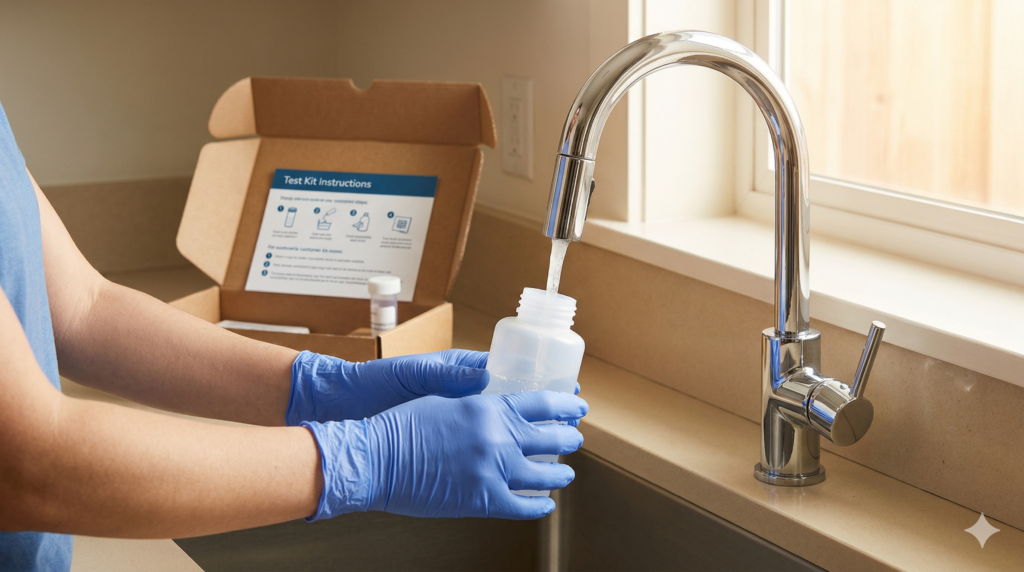
Somebody has to collect them. Chain-of-custody paperwork, proper containers, temperature controls during transport, logging results when they come back days or weeks later. For a mid-size facility, this sampling workflow eats 15 to 20 hours every week. As a result, that is roughly $73,000 a year in loaded labor cost for one operator and one technician.
The results arrive too late to act on. A grab sample taken Monday tells you what the water looked like Monday. If ammonia spiked Tuesday morning, you find out the following week. By then, the blowers have been running at full power for days, the discharge may have exceeded permit limits, and the window to intervene closed before you knew it opened.
In-house analyzers carry their own overhead. Daily calibration, reagent replacement, membrane cleaning, periodic certification. Each analyzer demands 5 to 10 hours of maintenance per week, and you still only get data at the intervals you test.
Regulatory exposure adds up quietly. EPA and state agencies are shifting toward continuous monitoring expectations. Facilities that rely on periodic grab samples face more scrutiny during audits and are statistically more likely to miss exceedances between sampling events. Furthermore, a conservative estimate puts this compliance risk at $20,000 or more per year in potential penalties and corrective action costs.
In total, a mid-size facility running a basic compliance testing program easily spends $200,000 to $400,000 per year. Almost all of it retrospective. Almost none of it generating operational insight.
What an Automated Water Quality Monitoring System Delivers
A full-service continuous monitoring platform delivered as a subscription covers everything: hardware, connectivity, cloud analytics, maintenance, software updates, and unlimited testing frequency. Moreover, there is no capital outlay. The subscription includes:
- Hardware on lease (no purchase, no depreciation)
- Simultaneous monitoring of 30+ parameters
- Warranty, replacement parts, and field maintenance
- Cellular or Wi-Fi connectivity
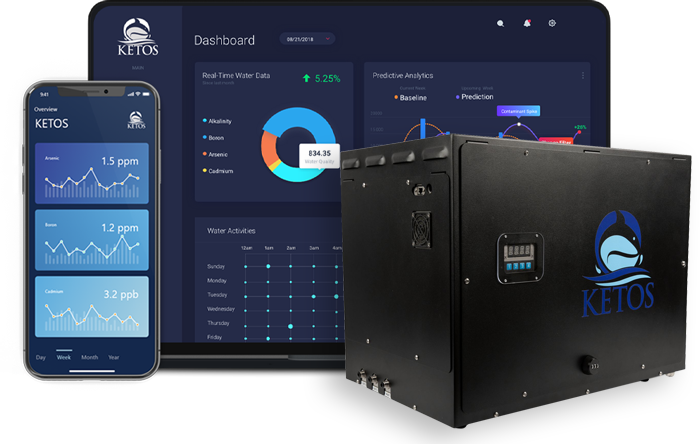
- Cloud platform with real-time dashboards, threshold alerts, and automated compliance reports
- Software and firmware updates over the life of the subscription
- No per-test charges, no matter how often you sample
Compare that to the $100,000+ per year in lab fees alone under a manual program for a two-site operation. The real story is what happens when you have continuous data instead of weekly snapshots.
Where the Savings Actually Come From
The ROI numbers below come from documented deployments where an automated water quality monitoring system replaced or supplemented manual testing programs. They break into three sectors.
Wastewater Treatment
Wastewater plants test constantly for ammonia, pH, dissolved oxygen, nitrates, and phosphates. The permit requires it. The biological treatment process depends on it. And the energy bill to run aeration is one of the largest line items in the operating budget.
Annual savings range: $84,000 to $2.8 million
Typical payback: 8 to 12 months
ROI range: 150% to 400%
Three savings drivers dominate:
Aeration energy. When you can see ammonia-nitrogen levels in real time, blower control shifts from a fixed schedule to a dynamic response. Operators at one facility cut blower runtime by 15 to 25% and documented $505,000 in annual energy savings. Payback took six months.
Chemical dosing. Continuous data feeds automated dosing systems, which eliminates the over-dosing that happens when operators adjust based on last week’s lab result. One multi-site deployment saved $1.36 million per year in chemical consumption. Payback: ten months.
Lab and labor elimination. Replacing the manual sampling program drops $328,500 per year in lab fees and $73,000 per year in technician labor. These savings hold steady across every wastewater deployment regardless of which process optimization benefit is the primary driver.
Industrial Manufacturing
Chemical plants, food and beverage operations, and electronics fabricators all depend on precise water chemistry. A pH reading that drifts half a unit can ruin a product batch, corrode equipment, or trigger a discharge violation. The stakes are high, and the testing frequency to manage those stakes drives significant cost.
Annual savings range: $430,000 to $4.2 million
Typical payback: 2 to 8 months
ROI range: 300% to 1,200%
Three documented applications:
pH dosing optimization. A chemical manufacturer installed real-time pH monitoring with automated feedback control and reduced acid/caustic consumption by 30 to 45%. Annual savings: $1.51 million. Payback: one month.
Chemical treatment optimization. An industrial water treatment plant replaced manual jar testing with continuous monitoring data, cutting chemical spend by 25 to 35%. Annual savings: $489,700. Payback: 2.6 months.
Flotation pond management. A mining operation optimized flotation chemistry using continuous water quality data, reducing chemical use by 40 to 55%. Chemical savings alone: $2.53 million per year. Payback: less than one month. Over five years, cumulative savings across these industrial applications are projected at $11.9 to $65.1 million.
Agriculture
For agricultural operations in water-scarce regions, the economics center on electrical conductivity (EC) monitoring for irrigation optimization.
Annual savings: $64,500 (6-hectare operation)
Typical payback: 8 months
ROI: 53.7%
Water efficiency drives the savings. Real-time EC data lets operators dial in irrigation precisely, reducing water consumption by 20 to 30% and saving $63,200 per year on a 6-hectare operation. The ROI scales with acreage: a 50-hectare farm reaches 97.1% ROI because monitoring costs distribute across more land while water savings grow proportionally.
Side-by-Side Summary
| Metric | Wastewater | Industrial | Agriculture |
|---|---|---|---|
| Annual Savings | $84K to $2.8M | $430K to $4.2M | $64.5K (6 ha) |
| Payback Period | 8 to 12 months | 2 to 8 months | 8 months |
| ROI | 150 to 400% | 300 to 1,200% | 54 to 97% |
| Top Savings Driver | Energy + chemicals | Chemical optimization | Water efficiency |
Calculate Your Water Testing ROI
Plug in your facility’s numbers below to see where you stand. The defaults reflect a mid-size industrial operation; adjust them to match your situation.
Water Treatment ROI Calculator
Enter your current operating costs to see estimated annual savings from automated real-time monitoring.
Total yearly spend on energy, reagents, and treatment operations
$ / year
Sensor parameters replaced per day
tests
Tanks / zones being monitored
basins
Fully-loaded hourly cost
$ / hr
hrs
Average cost per compliance event
$
Estimated Annual Impact
| Total Annual Savings | |
| Estimated Payback Period based on typical monitoring subscription |
Savings Breakdown
| Energy and Chemical Optimization | |
| Manual Testing Labor Eliminated | |
| Compliance Savings |
Estimates based on industry benchmarks. Contact us for a savings analysis tailored to your facility.
Manual Lab Testing vs. Continuous Water Quality Monitoring
| Factor | Manual Lab Testing | Automated Continuous Monitoring |
|---|---|---|
| Data frequency | Weekly or monthly | Hourly or continuous |
| Time to results | 3 to 14 days | Real-time |
| Parameters per device | 1 to 5 per test panel | 30+ simultaneously |
| Capital expenditure | $50K to $200K+ in analyzers | $0 (subscription model) |
| Maintenance burden | Daily calibration, reagent swaps | Included in subscription |
| Compliance reporting | Manual data entry and filing | Automated, EPA-compliant |
| Alerts | None (retrospective only) | Real-time threshold alerts |
| Accuracy | NELAC-certified | NELAC-comparable, EPA-compliant |
| Per-test cost at scale | $150 to $500 per sample | Unlimited testing, flat subscription |
What Changes When You Have Continuous Data
Although the dollar savings are easy to quantify, the operational improvements are harder to put a number on. However, they compound over time.
For instance, with continuous data, operators can close the loop on chemical dosing. Instead of adjusting based on a lab result from last Tuesday, dosing systems respond to what the water is doing right now. In addition, aeration responds to actual ammonia levels rather than running on a timer. Similarly, filtration adjusts to real turbidity readings rather than a fixed schedule.
When a regulator asks for historical water quality records, your water quality monitoring system produces a complete, timestamped, audit-ready dataset on demand. No binders or manual data compilation, and no gaps where a sample was missed or a result was delayed.
And for organizations managing multiple sites, cloud-connected monitoring gives every operator visibility into every location from any device. Therefore, the plant manager in Sunnyvale can see the same real-time data as the field technician in New Braunfels.
Is a Water Quality Monitoring System Right for Your Operation?
The clearest signal that a water quality monitoring system will pay off is your current testing spend. If your facility spends $50,000 or more per year on lab testing, has compliance-sensitive discharge permits, or manages more than one monitoring location, the payback math works quickly.
Besides the math, the deeper question is whether your current testing program gives you data you can act on, or simply satisfies the minimum reporting requirement and stops there. In contrast, facilities that make the switch find that compliance data starts pulling double duty, catching problems early enough to prevent them from becoming expensive.
See what the numbers look like for your facility
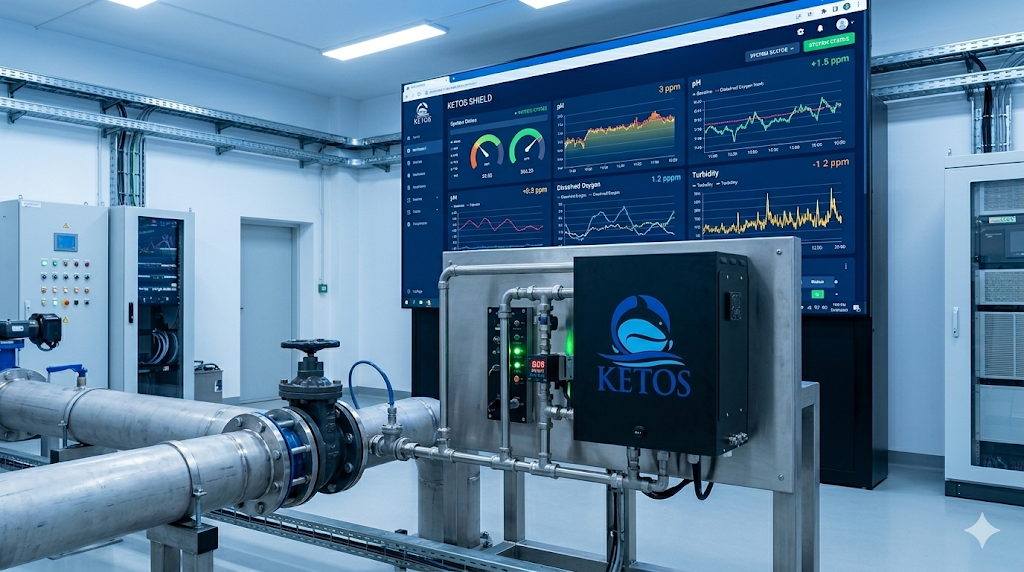
KETOS SHIELD monitors 30+ water quality parameters continuously, replacing manual sampling with automated, lab-accurate data at a fraction of the cost. Schedule a walkthrough to see the platform and discuss your specific use case.