
The new Water Quality Benefit Accounting (WQBA) framework from the World Resources Institute, LimnoTech, and The Nature Conservancy gives companies a clear, defensible way to quantify the water quality benefits of their projects and communicate claims credibly. It lays out six practical steps – from understanding local catchments to preparing transparent claims – and specifies indicators, methods, and eligibility criteria.
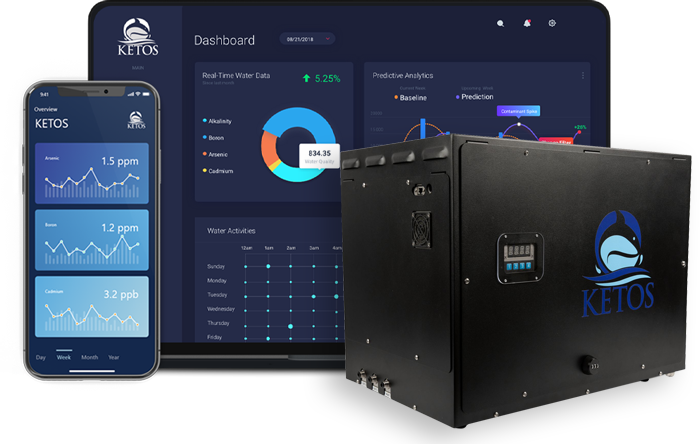
KETOS complements WQBA by delivering the continuous, real-time water quality measurements that make those claims auditable and actionable. See the original framework: Water Quality Benefit Accounting (WRI)
Why this matters now
Water quality risk is now as material as water quantity risk for many sectors. WQBA was created because companies increasingly set water quality goals (e.g., SDG 6.3) yet lacked consistent, science-based guidance to quantify and report progress. This guidebook is designed to provide programmatic methods and principles for credible claims, adapted from the widely-used Volumetric Water Benefit Accounting (VWBA) approach.
What is Water Quality Benefit Accounting (WQBA)?
WQBA is an accounting framework that helps organizations measure pollutant reductions that result from their activities – e.g., lowering nutrient loads, cutting sediment, reducing bacteria, or mitigating thermal pollution – and use those measurements to track and communicate progress toward water quality goals. It focuses on quantifying the output (the water quality benefit itself) at the project scale using consistent indicators and methods, while acknowledging that broader ecological or social outcomes may require additional assessment. For full details, see the original article linked above.
Need real-time water quality monitoring?
KETOS SHIELD continuously monitors 30+ parameters — replacing manual testing with automated, lab-accurate data.
Schedule a Demo →The WQBA flow, end-to-end
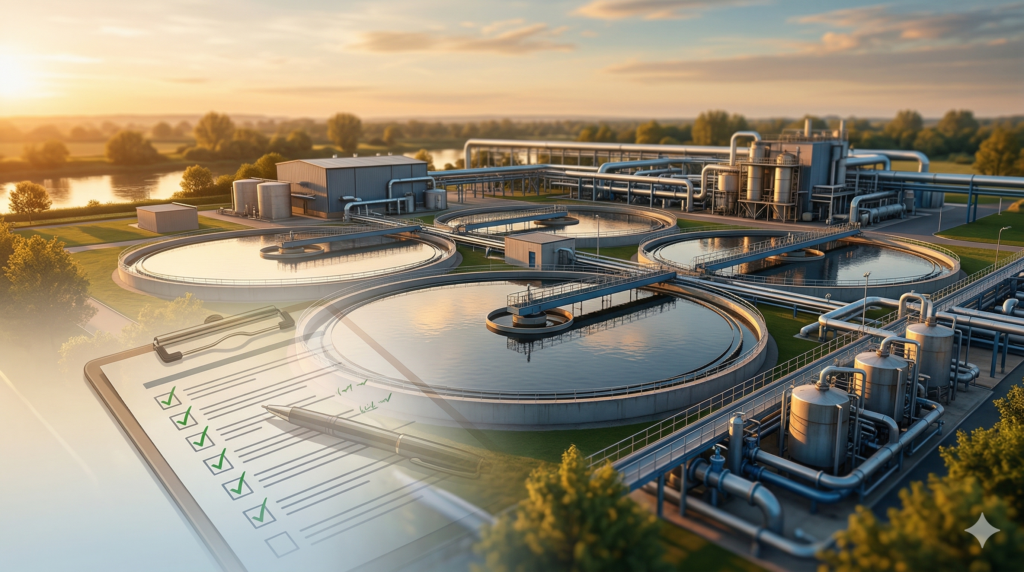
WQBA lays out six steps that a practitioner can follow. These steps are practical – not prescriptive – and map closely to the updated VWBA 2.0 method.
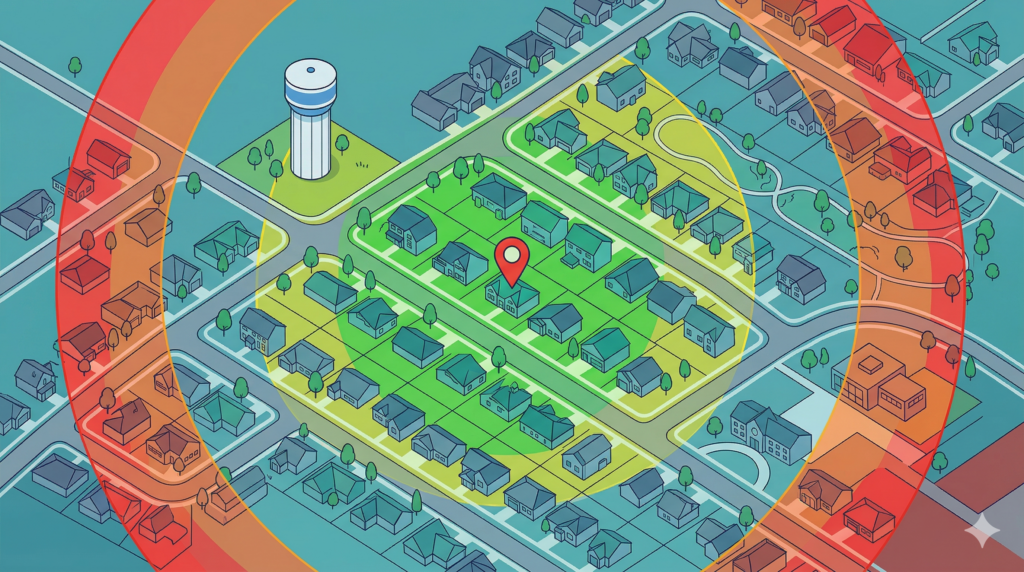
- Understand the local catchment context – Identify shared water challenges and how your operations interact with the watershed (boundaries, surface/groundwater conditions, governance, relevant parties, and known issues).
- Identify and evaluate potential project activities and partners – Align with existing efforts; shortlist activities likely to deliver WQBs (e.g., agricultural BMPs, sanitation upgrades, wetland restoration).
- Quantify the WQBs of project activities – Select the objective, indicator, and method; gather data; calculate with/without-project deltas.
- Plan and agree – Align on cost, duration, tracking, and attribution before implementation to avoid over-claiming.
- Implement and track – Execute with defined monitoring and reporting plans.
- Confirm and prepare for communications – Make conservative, transparent claims supported by data and agreed attribution.
The “what to measure” question
WQBA standardizes indicators so results are comparable:
- Reduced pollutant load
- Avoided pollutant load
- Percent pollutant concentration reduction
- Average temperature percent reduction
- Peak temperature percent reduction
You then select a calculation method (seven methods are described, with examples and case studies), or use another scientifically defensible method aligned with the same principles.
Data are the linchpin. WQBA quantifies the benefit as the difference between with- and without-project conditions, and it asks you to check results critically for defensibility – including seasonal effects where relevant. That’s impossible without reliable, frequent measurements.
When is a project eligible to claim a WQB?
The framework sets out eligibility criteria, including: a quantifiable pathway; relevance to local shared water challenges; internal buy-in plus support from external entities; beyond-business-as-usual performance; the ability to track outputs over the intended claim duration; and minimizing trade-offs and reputational risk.
How to attribute and communicate claims (without the headaches)
Transparent, conservative attribution should be agreed up front – especially when multiple sponsors are involved. Cost-share is common when outputs are primarily water quality benefits; parties should align on what costs are in-scope (CAPEX, OPEX, monitoring, etc.). When attribution is unclear (e.g., environmental credits), claims should demonstrate intentionality, additionality, and permanence.
Where KETOS fits (and why it matters to WQBA)
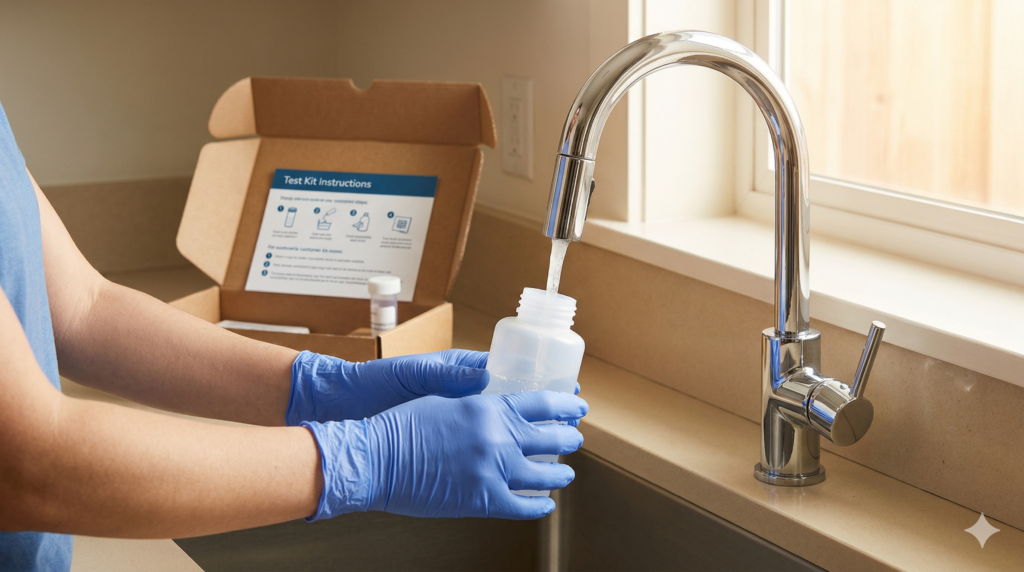
The WQBA is rigorous about measurement – and that’s KETOS’ speciality. Continuous, real-time monitoring from KETOS enables you to:
- Capture the with/without signal with enough frequency and resolution to make benefits defensible (e.g., diurnal swings, storm events, seasonal pulses).
- Track multiple indicators (nutrients, conductivity proxies for salinity/metals, temperature, turbidity/sediment proxies, and more) to match WQBA indicator/method choices.
- Execute the tracking and reporting plan over the full claim duration, not just at project closeout.
- Reduce attribution risk with auditable data streams that all parties can stand behind.
Bottom line: WQBA tells you what to count and how to claim; KETOS ensures you actually have trustworthy numbers to back it up.
A quick, concrete example
Imagine a food & beverage facility in a nutrient-stressed basin. The team sponsors wetland restoration and on-site process changes to reduce nitrogen and phosphorus loads.
- Objective & indicator: Reduce excess nutrients driving eutrophication; choose pollutant load reduction as the indicator.
- Method: Use a WQBA-aligned calculation method for nutrient load reduction.
- Measurement: KETOS monitors influent/effluent nutrients and downstream proxies plus temperature and turbidity to capture event-driven spikes and seasonal patterns. Results are evaluated versus without-project conditions across the appropriate time window.
- Attribution & claim: Sponsors agree to a cost-share attribution and communicate conservative, time-bounded claims tied to the tracking plan.
FAQ
Is WQBA only for factories?
No. It spans agricultural BMPs, sanitation, natural infrastructure (wetlands, recharge), and more chosen to match local shared challenges.
Does WQBA replace outcome monitoring (e.g., aquatic life)?
No. WQBA emphasizes outputs (pollutant reductions) as a practical, standardized step; outcome monitoring can be layered when feasible.
What if our project is small relative to the basin?
You can still quantify a project-scale benefit even if the basin-scale signal is hard to detect; that’s expected and addressed in the guidance.
What to do next
- Pick your pilot basin and validate the shared challenges with local stakeholders.
- Select your indicator(s) & method aligned to the objective.
- Instrument the project with continuous monitoring to capture seasonal and event-based dynamics.
- Lock in attribution and a tracking plan before implementation.
- Communicate conservatively – claims should be defensible, proportional, and transparent.
How KETOS helps you “measure to manage”
- Real-time, multi-parameter sensing tailored to nutrient, sediment, bacteria, and temperature indicators.
- Event and season capture so WQBs aren’t under- or over-estimated.
- Automated evidence to support claims, audits, and stakeholder confidence.
Primary reference
World Resources Institute, LimnoTech, and The Nature Conservancy, Water Quality Benefit Accounting (guidebook).