

Across the country, students are returning to schools that may be inadvertently exposing them to a class of dangerous, long-lasting chemicals. PFAS, also known as forever chemicals, are contaminants that have been linked to cancer, liver damage, immune dysfunction, and developmental effects in children. Though new EPA regulations are set to enforce stricter limits on PFAS in drinking water by 2029, millions of students are already attending schools in areas with elevated risk today.
What the Data Reveals
Using enhanced data from the EPA’s UCMR5 program, geotagged EPA-regulated industrial facility locations with a history of being associated with PFAS, and comprehensive school location and enrollment data, KETOS performed a detailed geospatial analysis of PFAS exposure risk across U.S. schools.
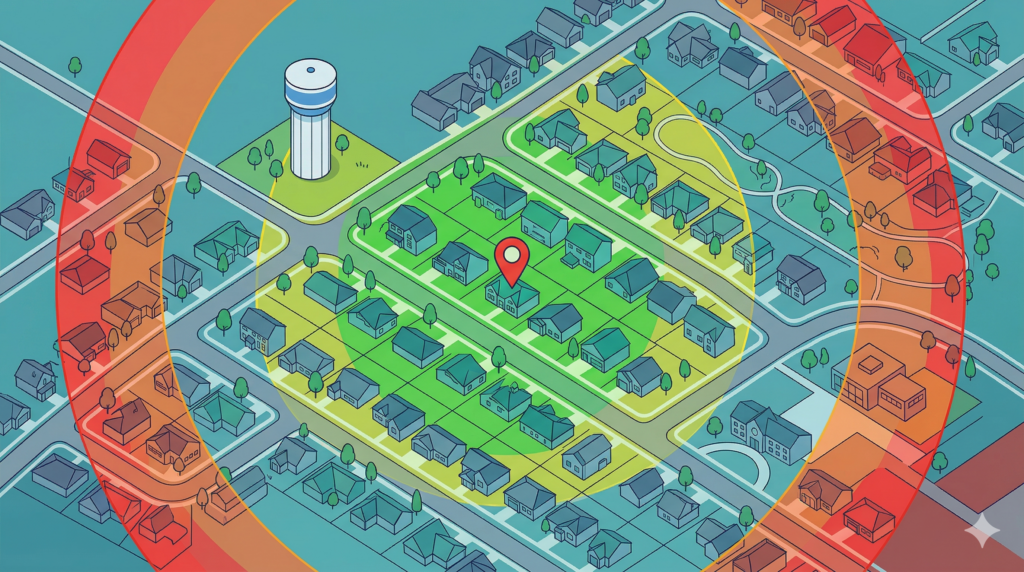
Every school was assessed based on two proximity-based risk factors:
- PFAS-contaminated public water systems (PWS) within a 10-mile radius
- Clusters of 5 or more PFAS-linked industrial facilities within a 10-mile radius
Concerned about contaminants in your water?
Get lab-certified water testing from KETOS KELP — results you can trust, backed by real data.
Order a Water Test →National Risk Summary
The data KETOS assessed included:
- 133,000+ schools (public & private)
- ~51.2 million students
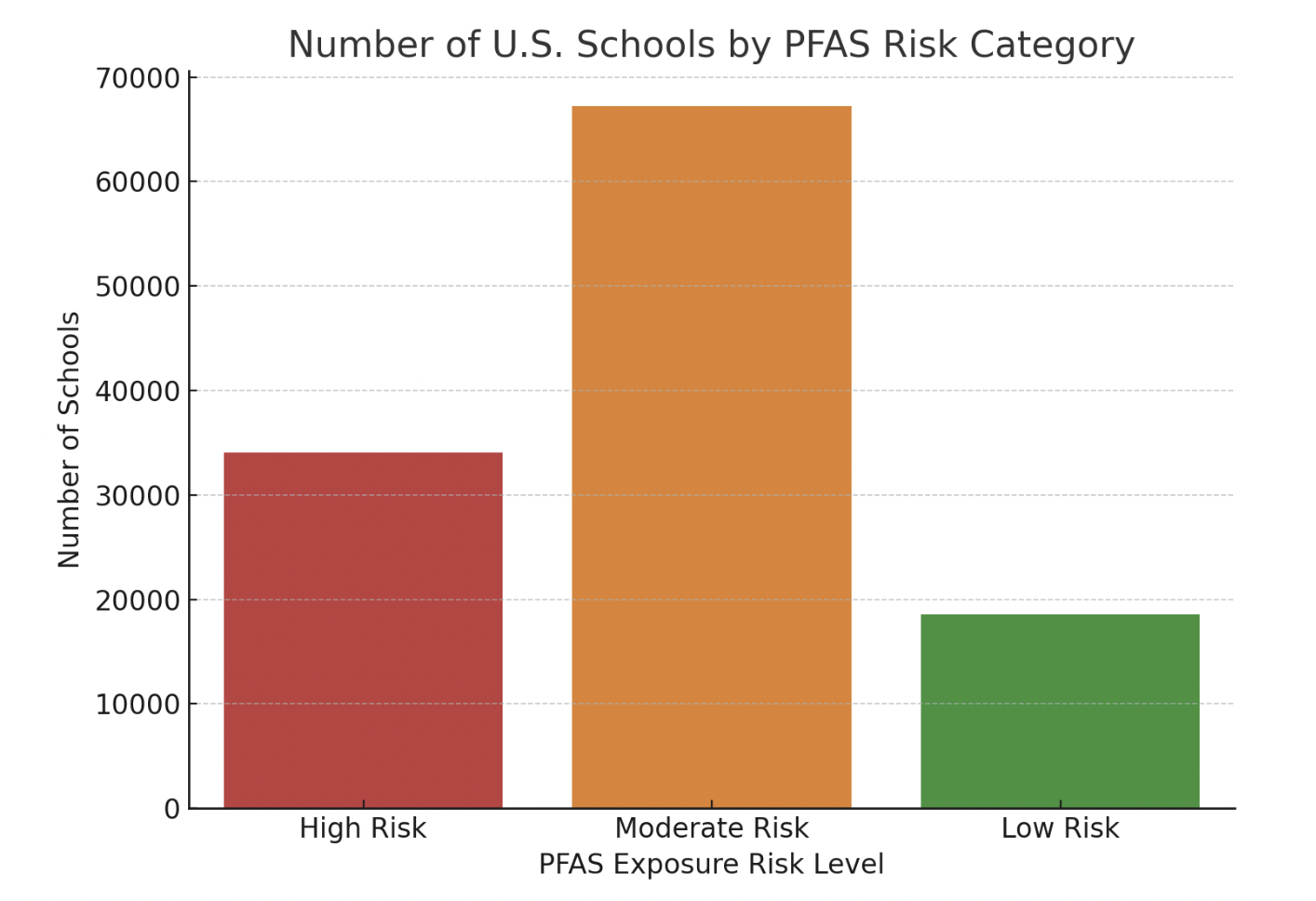
Schools were categorized as:
- High Risk: Close to both contaminated PWS and industrial sites
- Moderate Risk: Close to either contaminated PWS or PFAS-linked industrial sites
- Low Risk: Close to neither
U.S. Schools at Risk from PFAS Contamination
The chart below shows the number of all public and private schools that fall into each PFAS exposure risk category:
Percentage of Students Potentially Exposed to PFAS at School
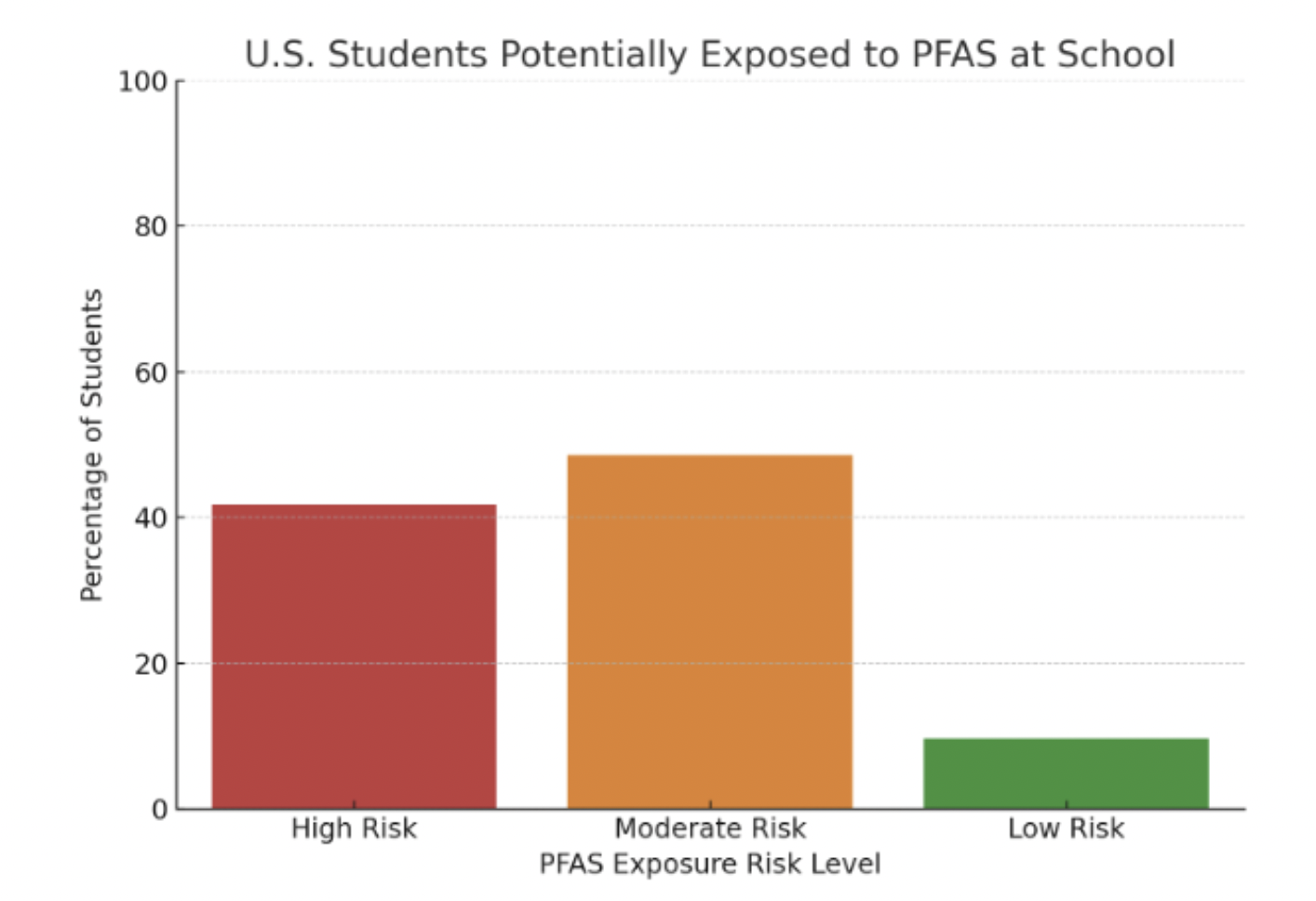
This chart illustrates the percentage of U.S. students potentially exposed to PFAS based on school location:
What This Means for Public Health
PFAS persistently accumulates in the body over time. Children, whose organs and immune systems are still developing, are particularly vulnerable.
It’s important to note that this risk is not evenly distributed. While the East Coast, Midwest, and industrial regions of California and Texas show strong clustering, many suburban and rural communities are affected, too. In places where PFAS has been measured, the nearest neighboring contaminated site is typically within 10 miles (and often closer).
The analysis revealed that over 92% of students in the U.S. (nearly 10 in 11 children) are enrolled in schools where PFAS risk is either confirmed or significantly elevated due to known non-zero measurements of PFAS or due to proximity to industrial sources linked to PFAS risk.
Additionally, nearly 80% of all U.S. schools are located within 10 miles of either a PFAS-contaminated water source, a high-density cluster of industrial facilities linked to PFAS (or both).
What You Can Do Right Now
At KETOS, our core belief is that you can’t manage what you don’t measure, and action comes from understanding. There are steps that you can take today to help you get a fuller picture of your exposure to PFAS:
- Check Your School’s PFAS Grade
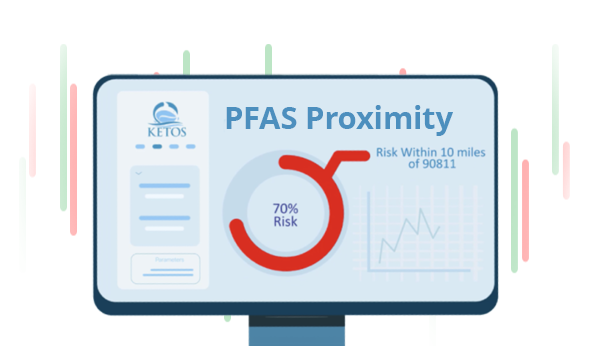
Use our free tool on a desktop or mobile browser to see whether your school or home is near PFAS risk zones. Share your results with others in your community through Facebook, X and WhatsApp. - Test Your Tap Water Immediately
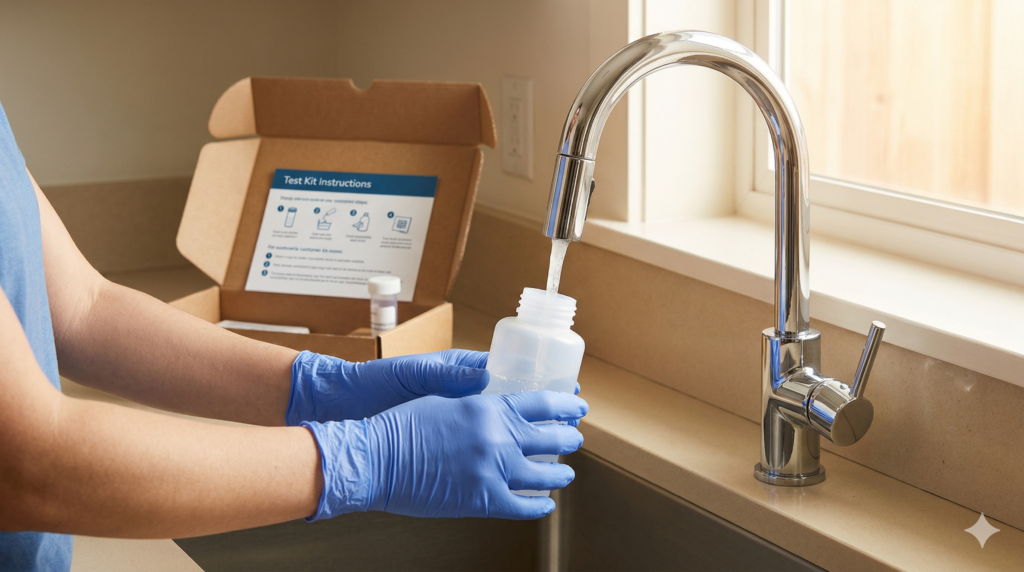
Order a PFAS testing kit for your school or home via KETOS KELP. - Dive Deeper
Download the full datasets, visualizations, and methodology from KETOS PRISM.
Why Gaining Clarity Facilitates Action
With new federal PFAS limits set for 2029, utilities, school districts, and local governments must not wait. Monitoring, mitigation, and public transparency efforts are critical – especially for schools, where millions of children could be ingesting unsafe water daily.
We know where the risks are. We have the tools. Now is the time to act.