

Introduction
In today’s complex water-management environment, transitioning from periodic grab-sampling to a continuous, online water-quality monitoring system is no longer optional. Whether you’re overseeing a municipal drinking-water network, monitoring industrial effluent, or safeguarding a watershed, real-time data delivers actionable insight faster.
In this article, we’ll walk through how to evaluate, select, and deploy an online monitoring system that meets operational, regulatory, and performance goals. We’ll also highlight how the right-sized solution brings advanced features like remote diagnostics, multi-parameter sensing, automated alerts, and cloud-native analytics to your water-quality program.
Why Continuous Online Monitoring?
The advantages
-
Real-time awareness of water-quality changes: Unlike snapshot sampling, an online system captures dynamic events. Sudden shifts in turbidity, free-chlorine residual, or pH fluctuations can all be captured instantaneously allowing for rapid response.
-
Improved regulatory & operational visibility: According to the United States Environmental Protection Agency (EPA), online monitoring (OWQM) supports both contamination-event detection and day-to-day system optimization.
-
Trend-analysis and asset management: Continuous datasets enable pattern-recognition, predictive maintenance, and proactive system management rather than reactive remediation.
-
Labor and cost savings over time: Once deployed, routine manual sampling and lab turnaround can be reduced, freeing staff for higher-value tasks.
The caveats
-
Up-front cost: Installation of fixed sensors, communications, and remote power/back-up infrastructure may raise initial expenditure.
-
Maintenance demands: Calibration, fouling control, drift-monitoring, sensor replacement and periodic validation remain vital for data integrity.
-
Data overload & alert fatigue: Collecting lots of data is good only if you have analytics, alert thresholds, and procedures in place to act.
-
Fit-for-purpose: Not every site needs full 24/7 multi-parameter monitoring; for some, portable or periodic sampling remains appropriate.
Need real-time water quality monitoring?
KETOS SHIELD continuously monitors 30+ parameters — replacing manual testing with automated, lab-accurate data.
Schedule a Demo →Key Criteria When Evaluating Systems
To select an effective online water-quality monitoring system, evaluate across the following dimensions:
1. Monitoring objectives & parameter selection
Define what you need to monitor and why. Are you targeting source-water intrusion, distribution-system water age, industrial effluent loads, or asset corrosion? The EPA’s guidance suggests beginning with clear design goals.
Typical parameters include:
-
pH, temperature, turbidity, specific conductance
-
Disinfectant residuals (free chlorine, monochloramine) in drinking water systems
-
Oxidation-reduction potential (ORP), UV-254, total organic carbon (TOC)
-
Nutrients (ammonia, nitrite, nitrate), phosphate, heavy metals (depending on context)
2. Location strategy & coverage
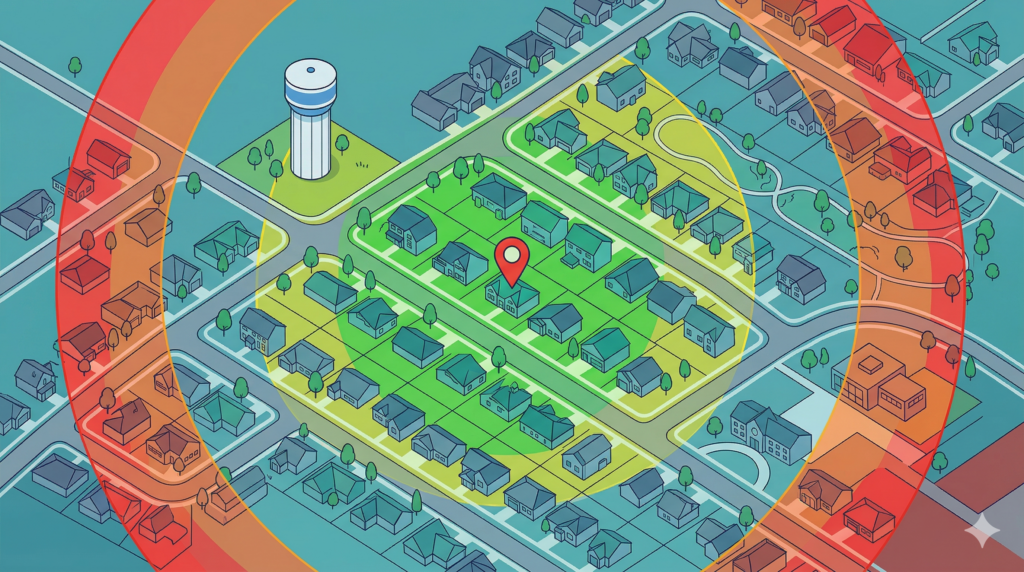
Where you place sensors matters. For distribution systems, entry points, storage-tank outlets, booster stations, dead-end lines, and consumer meters are common.
Consider spatial and temporal coverage: you want to maximize the percent of system monitored and minimize detection latency.
3. Data communications & integration
A modern system should support remote access, cloud connectivity, alerting, and integration (with SCADA, ERP or asset-management systems). EPA guidance emphasizes communications architecture for OWQM.
4. Maintenance, calibration & reliability
Ensure the system supports scheduled maintenance, sensor health diagnostics, fouling mitigation, and redundancy. As the EPA notes: operational reliability is a key performance objective.
5. Analytics, alerts & decision support
Raw data isn’t enough. You’ll want dashboards, anomaly-detection logic, alert thresholds, root-cause investigation workflows, and escalation procedures.
6. Scalability, flexibility & total cost of ownership
Look beyond initial cost to ongoing consumables, calibration, sensor drift, network communications and data-management overhead. Some full-featured systems pay for themselves in 1-2 years via avoided incidents and labour savings.
7. Fit for water-type & environment
Whether it’s surface water, groundwater, distribution networks, industrial effluent or wastewater, the environmental conditions (bio-fouling, access, power, climate) may differ significantly. Use case-matched hardware and installation design.
How the Right Solution Manages the Details
Selecting a best-in-class online monitoring system means you’ll benefit from features like:
-
Modular multi-parameter sensor racks that allow plug-and-play upgrades and field-serviceable modules
-
Remote-diagnostics and plug-in replacements to reduce onsite technician travel
-
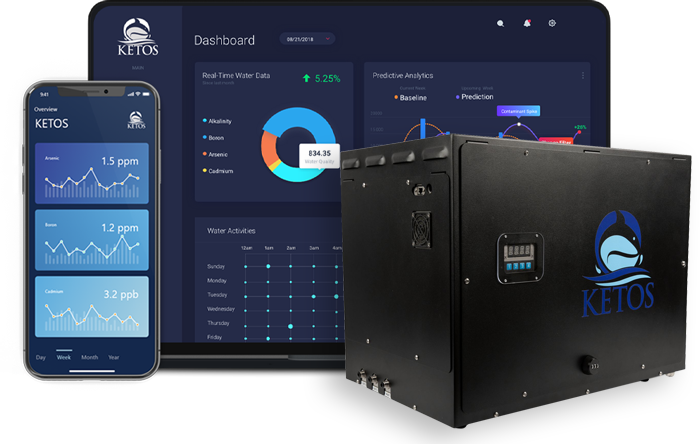
Cloud-native dashboards with real-time visualisation, trend-analysis, and mobile alerts
-
Proven installation workflows (including power/back-up, data communications and mounting)
-
Calibration-tracking and audit-trail functionality for regulatory compliance
-
Alert-management with built-in root-cause workflows, supporting rapid investigation when set-points are exceeded
-
Scalable architecture so you can start in critical zones and expand gradually
-
Built-in redundancy and health monitoring of sensors to maintain high-uptime performance
Deployment Best Practices
-
Pilot & baseline – Start with selected critical locations, establish baseline water-quality trends, validate sensors and communications.
-
Define alert thresholds – Use historical data, process tolerances and expert input to define when one parameter triggers an investigation.
-
Train operators – Ensure staff understand how to interpret data, respond to alerts, maintain equipment, and log actions.
-
Integrate data workflows – Hook the monitoring system into your SCADA/asset-management/maintenance systems so actionable intelligence flows seamlessly.
-
Routine maintenance & sensor checks – Establish schedules for cleaning, recalibration, sensor health checks and redundancy verification.
-
Review and tune – Periodically review alerts (false positives, true incidents), refine thresholds, and expand coverage as needed.
-
Document for compliance – Maintain logs of calibration, alerts, investigations, corrective actions to support regulatory or internal audit needs.
Common Pitfalls & How to Avoid Them
-
Installing high-end sensors but neglecting data-management or analysis—leads to “data dump” with little insight.
-
Skipping maintenance/calibration leading to drifted or invalid data.
-
Failing to integrate alerts with response workflows: high alert frequency causes fatigue.
-
Poorly defined monitoring objectives—installing everywhere without clear goals dilutes ROI.
-
Using snapshot rather than continuous thinking: online means data every minute, hour or day, not just once in a while.
-
Over-customising early—choose systems with modular upgrades rather than bespoke from day one.
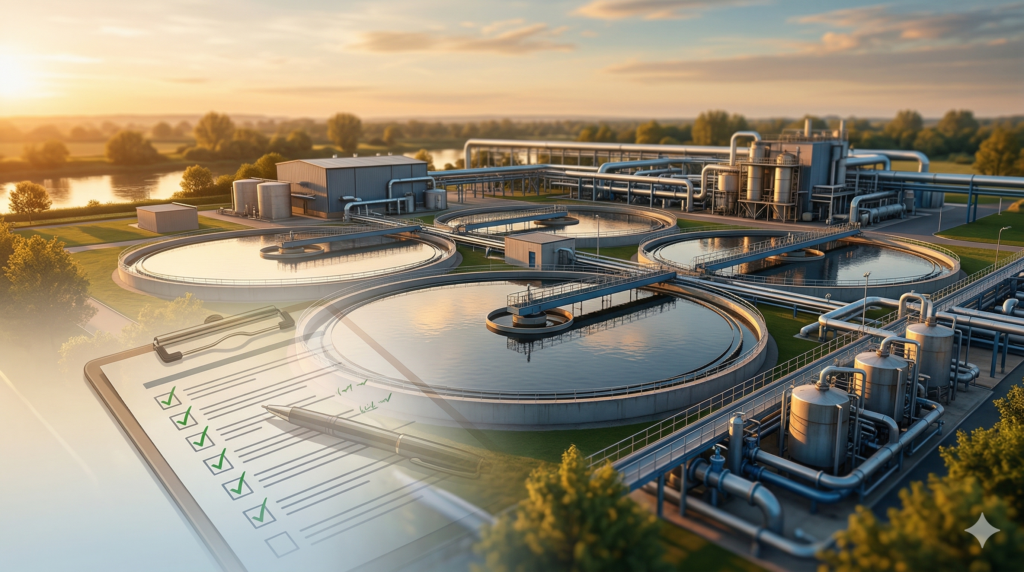
Final Checklist & Decision Guide
| Question | Yes | No |
|---|---|---|
| Have you defined monitoring objectives (e.g., contamination, distribution-system performance, process optimisation)? | ☐ | ☐ |
| Do you know which parameters, locations, and frequency you’ll monitor? | ☐ | ☐ |
| Does the proposed system provide real-time data, remote access, and alerting capabilities? | ☐ | ☐ |
| Is the communications architecture (data-transmission, cloud or local access) robust for your site? | ☐ | ☐ |
| Are maintenance, calibration and backup sensors clearly planned? | ☐ | ☐ |
| Are alert thresholds and response workflows defined? | ☐ | ☐ |
| Do you have a total cost of ownership estimate (hardware + installation + ongoing maintenance + consumables) compared with benefits? | ☐ | ☐ |
| Does the system scale—both in number of sensors and complexity of analytics? | ☐ | ☐ |
| Is the system appropriate for your environment (remote site, climate, access, power)? | ☐ | ☐ |
If you can check most of the “Yes” boxes, you’re well positioned for a successful continuous online water-quality monitoring deployment.
Why Water-Quality Managers Choose Us
At KETOS Inc. we’ve developed a next-generation water-quality monitoring-platform that aligns with all of these criteria. Advanced modular sensors, cloud-native analytics, remote-diagnostics and anomaly alerting are built-in. Our platform is engineered for high-uptime environments, supports multiple parameters, and is designed for both rapid rollout and long-term scalability.
Conclusion
Continuous online water-quality monitoring is a powerful tool—but only when thoughtfully designed, deployed and integrated. By aligning your objectives, selecting appropriate parameters and locations, ensuring strong communications and analytics, and planning for maintenance and data-workflow integration, you’ll get the real-time insights your organisation needs.
If you’re evaluated monitoring-systems or preparing to scale your program, use this guide to benchmark options. Revisit your strategy annually and refine as technologies evolve.
Want to dive deeper into specific topics like alert-design, sensor-selection or data-analytics? We’d be happy to walk you through them.