

Every facility manager and operations lead wants to get water monitoring right. The challenge with this is that not all “continuous” systems are created equal. The wrong choice can leave you blind at the very moment your data matters most.
The Hidden Cost of “Low-Frequency” Monitoring
Some systems claim to be continuous but actually take readings every few hours. That gap might sound small – until a contamination event happens between intervals.
A single pH crash or conductivity spike can invalidate a full day’s production or put you out of compliance without warning. True continuous monitoring means no blind spots, even at 2 a.m. on a Sunday.
Maintenance: The Silent Budget Killer
Many sensor systems rely on reagents, manual calibration, or physical sampling. That means recurring cost, chemical handling, and unexpected downtime.
Ask any operator: “How often does your team need to babysit the sensor?” If the answer is “weekly,” you’re paying for hidden labor.
Modern systems eliminate reagent use and self-calibrate, providing lab-grade accuracy without the overhead.
Need real-time water quality monitoring?
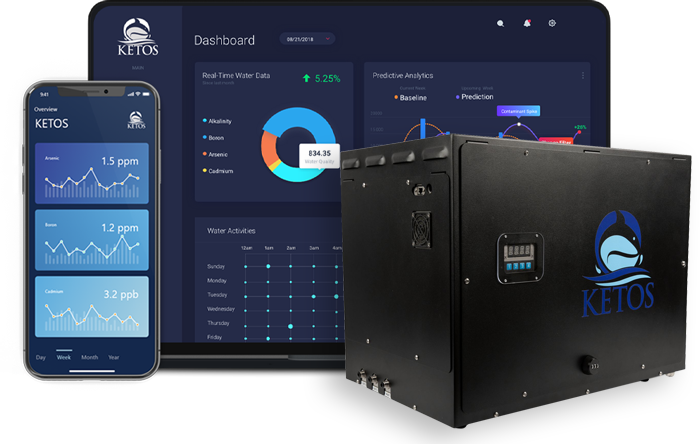
KETOS SHIELD continuously monitors 30+ parameters — replacing manual testing with automated, lab-accurate data.
Schedule a Demo →Data Without Context Is Just Numbers
Collecting data is easy; understanding it in real time is what saves you.
Look for systems that stream results directly to a cloud dashboard, deliver instant alerts, and automatically trend anomalies.
If your system still requires downloading spreadsheets or waiting for lab confirmation, you’re reacting days late to problems that evolve in hours.
When “CAPEX-Light” Turns Into “Data-Dark”
The appeal of cheap hardware is real—until maintenance, licensing, or data-hosting fees creep in.
Forward-thinking water teams now prefer subscription-based monitoring models that remove upfront capital cost and guarantee continuous performance uptime.
In other words, you pay for outcomes, not equipment—and your vendor owns the burden of keeping your data flowing.
Integration and Accountability
A water monitoring system should fit seamlessly into your operations—not live on a lonely USB drive.
Check if your system integrates with existing SCADA, ESG, or sustainability platforms, and whether results are audit-ready for compliance and reporting.
If your vendor can’t produce a secure, time-stamped data trail, your next audit could become an expensive guessing game.
The Takeaway
When choosing a continuous monitoring platform, don’t just ask:
“How often does it sample?”
Ask instead:
“Will this system still be giving me accurate, real-time data when no one’s watching?”
The right system delivers:
-
True continuous measurement, not interval snapshots.
-
Self-cleaning, reagent-free operation with minimal maintenance.
-
Automated, cloud-based reporting and instant alerts.
-
Zero upfront cost and guaranteed uptime under a service model.
Future-Proof Your Water Quality Monitoring
Modern water operations can’t afford uncertainty. There are many continuous water quality monitoring options out there in the market. Ensure that you choose a system that has continuous, lab-accurate water monitoring with no capital expense, and keep your facility compliant 24/7.
Related Resources
Looking for a deeper dive into the technology? Read our comprehensive guide to continuous water quality monitoring — covering automated IoT solutions, key parameters, industry applications, and how to meet compliance requirements with real-time data.