

Every 12 years, in India, tens of millions of worshippers converge to celebrate a unique cosmological event known as the Maha Kumbh Mela. Held in Prayagraj, at the confluence of the Ganga, Yamuna, and the mythical Saraswati rivers, Maha Kumbh Mela‘s celebrations align with the movements and alignment of Jupiter, the Sun, and the Moon. While perhaps not as well-known to North American audiences, the festival draws tens of millions of celebrants to the banks of the rivers to bathe, drink, and interact with the waters, which are believed to be imbued with divine energy, making the act of bathing in them spiritually purifying. This moment of spiritual resonance is rare, occurring only once every 12 years. Maha Kumbh Mela 2025, more than a decade in the making, fell in February of this year.
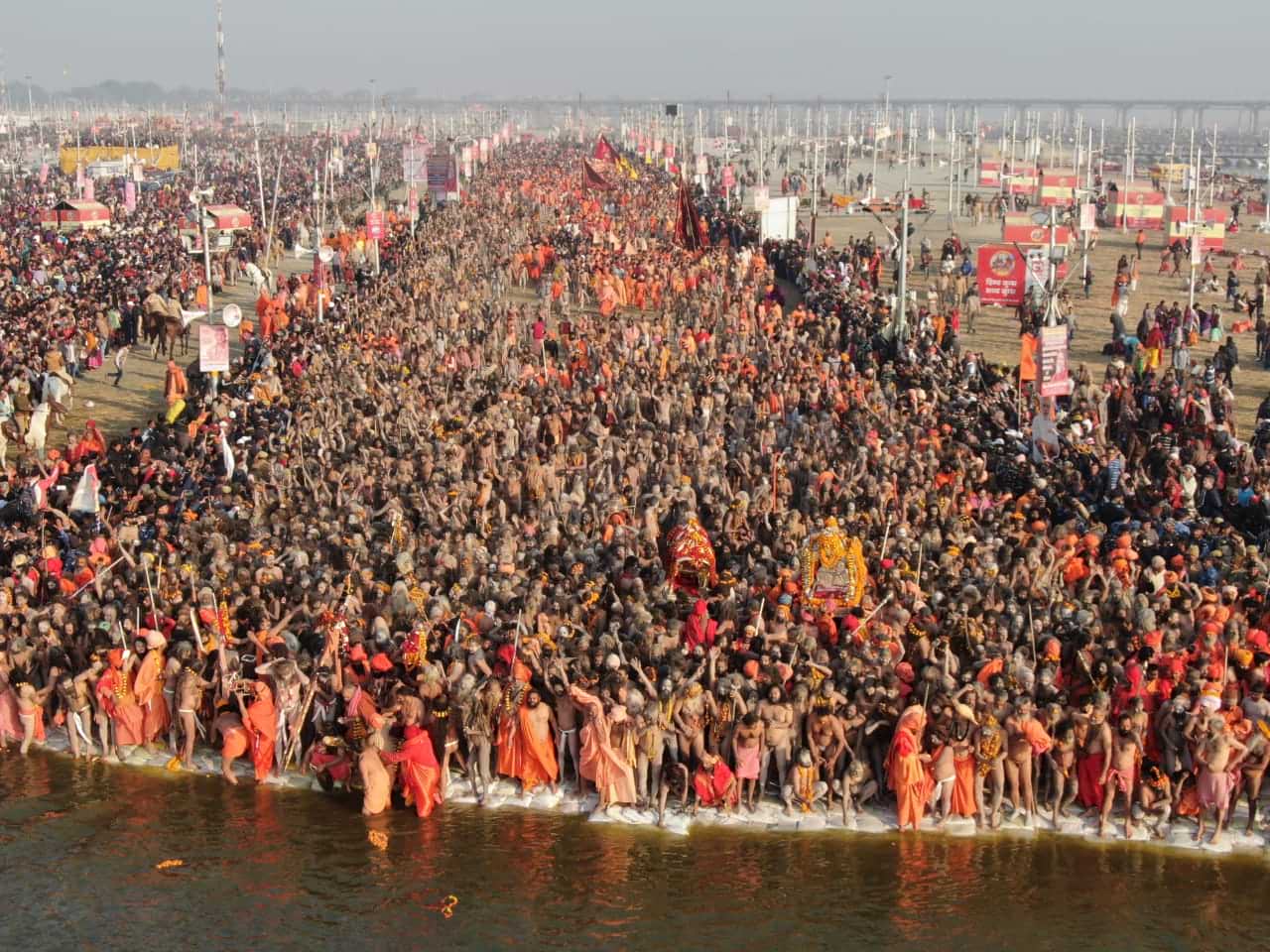
What sets the Maha Kumbh apart from the smaller Kumbh and Ardh Kumbh festivals (both also impressive in terms of attendance size) is its magnitude and mythological significance.
According to legend, when gods and demons fought over the nectar of immortality (amrit), a few drops fell on four earthly sites—Prayagraj being the holiest. The Maha Kumbh commemorates that mythic event and reaffirms India’s spiritual relationship with jal (water) as both a purifying force and a sacred connector between the mortal and the divine. It also happens to be one of the world’s largest religious gatherings. More than half a billion people attended this year’s festival.
Water: The Spiritual and Ecological Heart of the Mela
At the core of Maha Kumbh Mela is the ritual of bathing in the sacred river—a symbolic act of washing away sin, seeking moksha (liberation), and aligning oneself with universal harmony. The faithful enter the river not only with devotion but with the belief that the Ganga carries divine properties capable of transforming body and soul.
But while the faith in Ganga’s purity remains undiminished in the eyes of the congregants, the river itself has faced increasing ecological challenges. Decades of industrial pollution, sewage discharge, agricultural runoff, and urban encroachment have severely compromised the river’s health. During Maha Kumbh, when tens of millions of people interact with this water, the potential for waterborne illness and environmental damage grows exponentially.
This tension between spiritual purity and ecological degradation made Maha Kumbh Mela 2025 a critical moment—a convergence not just of people and planets but of tradition and technology.
The Water Temple Project for Maha Kumbh Mela 2025: A Vision of Harmony
In response to this critical need, the Water Temple Project was conceived as a powerful intersection of faith, environmental stewardship, and scientific innovation. Designed as both an architectural exhibit and a functional water access point, the project reimagined the act of consuming or bathing in holy water as a sustainable, mindful, and health-conscious experience.
Backed by ARUP Group (through their CSR initiative), the project unfolded in three phases:
- A comprehensive technical report to guide implementation
- A physical exhibit showcased during Maha Kumbh 2025
- A working prototype of the Natural Gangajal Filtration System
The vision was clear: honor tradition, preserve nature, and empower communities with access to clean, safe water.
Concerned about contaminants in your water?
Get lab-certified water testing from KETOS KELP — results you can trust, backed by real data.
Order a Water Test →KETOS SHIELD: Scientific Validation in Real-Time at the World’s Largest Religious Gathering
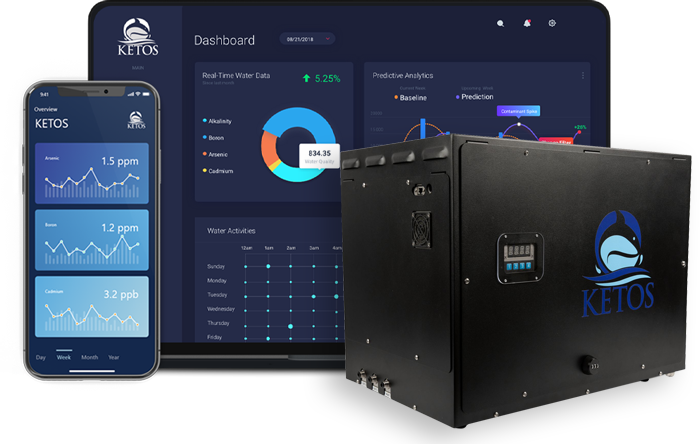
To ensure the spiritual experience did not compromise public health, KETOS participated in a truly unique water project as a key technology partner. KETOS delivered its SHIELD system, a real-time, AI-powered water quality monitoring solution that continuously tracks critical parameters in complex water environments, such as rivers.
The on-the-ground implementation involved:
- Deployment: KETOS SHIELD equipment was transported from Dallas to Delhi and then installed at the Water Temple site in Prayagraj.
- Integration: The system was seamlessly integrated with the natural filtration setup.
- Monitoring Capabilities: SHIELD tracked a comprehensive suite of water quality metrics.
KETOS was uniquely positioned to ensure the success of this project based on the significant number of parameters that can be monitored from one single device. This includes environmental factors like pH, conductivity and Total Dissolved Solids, nutrients like nitrates and nitrites, as well as heavy metals like arsenic, lead, copper, and chromium. The KETOS SHIELD can currently monitor for 35+ parameters, with new parameters, such as PFAS, currently on track to be added in the near future.
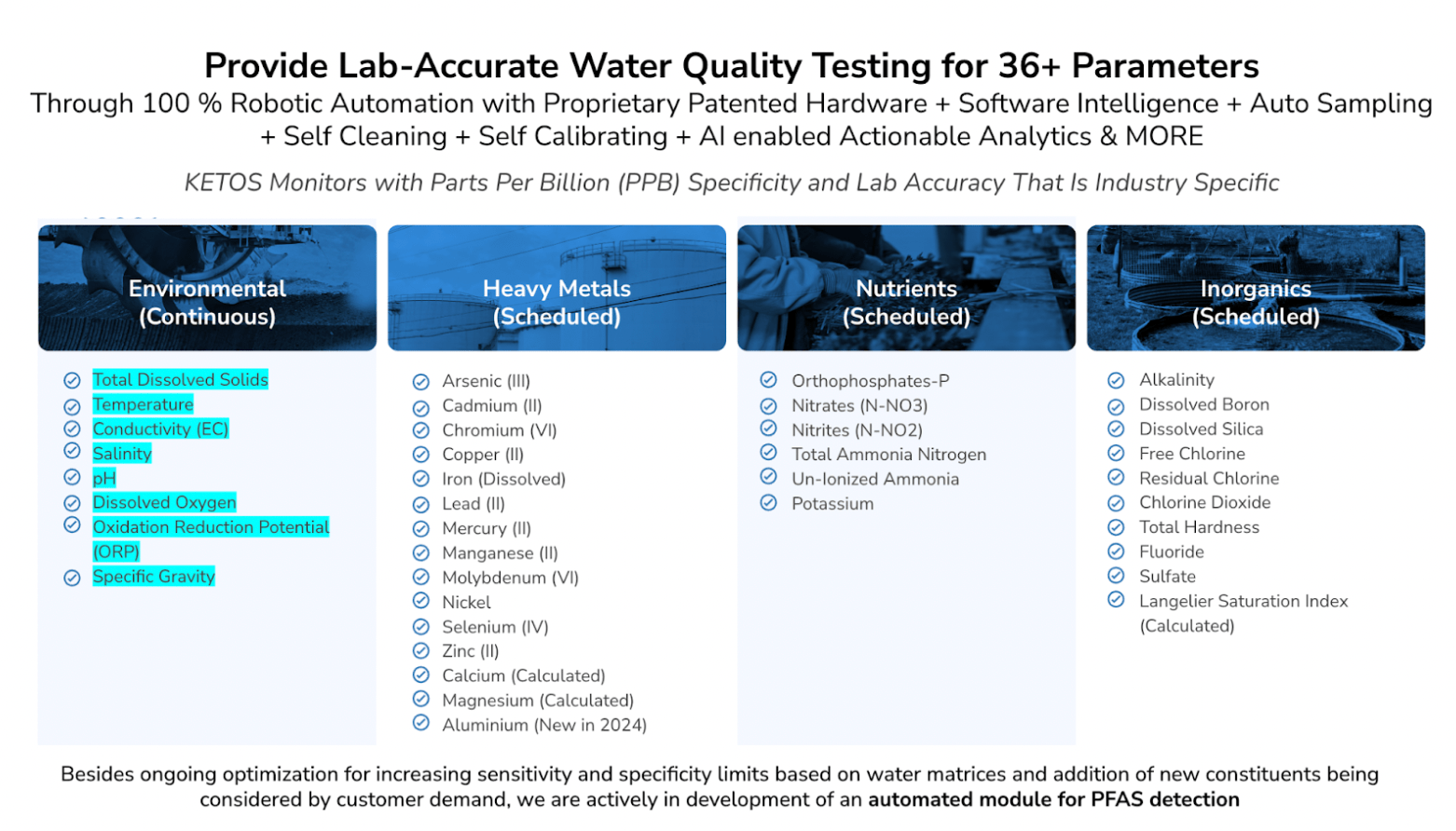
This scientific validation enabled on-site teams to respond in real time to any deviations from health standards, ensuring that the filtered Gangajal met both spiritual and safety expectations for public consumption and ritual bathing.
Collaboration in Action: Stakeholders for Success
This effort was made possible through a multi-stakeholder collaboration, with each partner playing a vital role:
- ARUP Group: Technical guidance and CSR funding
- Ganga Action Parivar (GAP): Site access and community engagement, with spiritual support from H.H. Swami Chidanand Saraswati
- Skyview Ventures: Seed funding for early prototype development
- Water Temple Collective: Creative and strategic leadership under architect Siddhartha Verma
- KETOS: Smart water intelligence and on-the-ground implementation
Together, we were able to create an inclusive and replicable model where faith and science not only coexist but also enhance each other.
A Legacy with Potential Ripple Effects
While the Maha Kumbh Mela 2025 may have lasted only a few weeks, the Water Temple’s impact is designed to ripple out and inspire water conservationists well beyond the event itself. With the success of this prototype, future installations are already being considered in other cities along the Ganga.
The project has also sparked momentum around the following:
- Public education and participation surrounding river health
- Water stewardship education programs
- Spiritual ecology practices like river meditation and mindful consumption
The Broader Potential: Protecting Waterways Worldwide
KETOS’ involvement in Maha Kumbh Mela 2025 illustrates just how effective transformation can be when technology acts as a bridge between tradition and sustainability. Whether it’s the Ganga in India or rivers and lakes in communities worldwide, real-time water quality intelligence can enable proactive, informed action and offer communities a tangible way to connect with and protect their local ecosystems and environments.
As lakes and rivers around the world face mounting pressure from pollution, urbanization, and climate change, the KETOS SHIELD system remains a powerful tool in the effort to restore natural balance, protect public health, and preserve cultural heritage.
Conclusion: Innovation and Tradition Are Powerful Allies
At its core, the Maha Kumbh Mela is a celebration of the eternal cycle—purification, renewal, and connection to something greater. By bringing cutting-edge technology to one of humanity’s oldest rituals, KETOS helped ensure that this sacred experience could be both spiritually fulfilling and scientifically safe.
This project is a testament to what is possible when innovation honours tradition. And it’s just the beginning.