
By Ganesh Hegde, Director, Data Science and AI Strategy
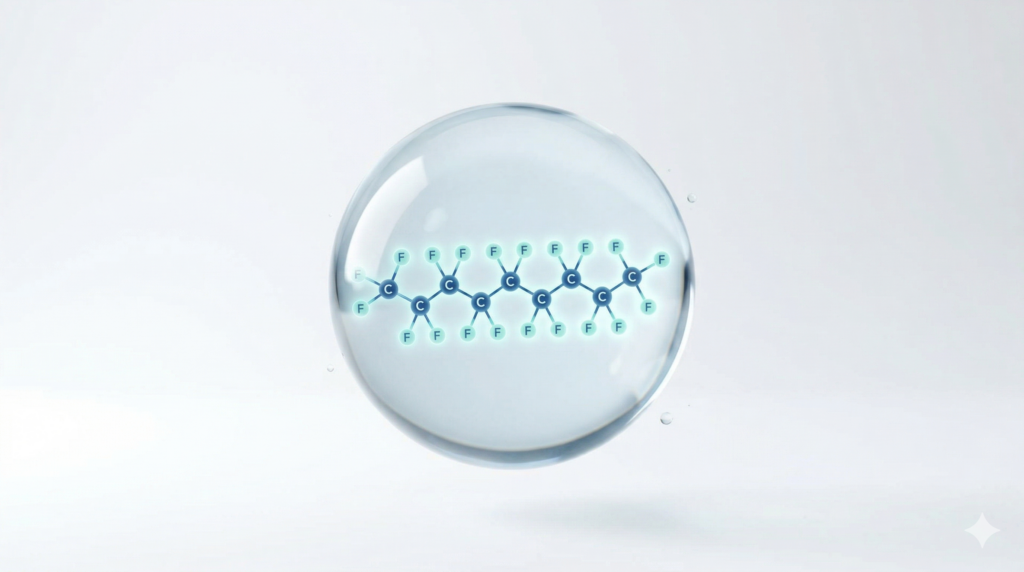
Artificial intelligence is booming, and so is its thirst. By now, it’s well known that training popular AI models such as OpenAI’s GPT-3 in a U.S. data center used about 700,000 L of fresh water. Researchers warn that by 2027, AI workloads could drive up to 6.6 billion m³ of annual water withdrawals—roughly the water a country the size of Denmark drinks each year.
Closed-loop liquid cooling looks like a silver bullet. It recirculates the same fluid instead of evaporating thousands of litres each hour, and Microsoft estimates savings of more than 125 million liters per site each year while running at a fleet-wide 0.30 L/kWh Water Usage Effectiveness (WUE).
But saving water is only half the story. In an earlier report on this topic, KETOS had highlighted the importance of being prepared for wastewater implications of an exponential rise in the buildout of AI datacenters. In this article, we discuss how the focus on closed-loop cooling as the go-to solution for AI datacenters has serious implications that haven’t really gotten the attention they deserve.
The Chemistry No One Talks About
Closed-loop systems rely on a cocktail of additives such as corrosion inhibitors, biocides, and antifreeze blends to keep water doing its job. They stop rust, starve microbes, and move heat off chips with high efficiency.
| Additive | Typical closed-loop concentrations | Safe-water limit | Why it matters |
| Nitrite inhibitor | 600 – 1,200 ppm (steel), up to 7,000 ppm in mixed-metal circuits |
1 ppm in U.S. drinking water | Converts to carcinogenic nitrosamines at treatment plants |
| Glycol antifreeze | 25-50% by volume | Discharge cap <0.25% (U-Michigan) | Spills spike BOD; an airport runoff carried 30,000 lb BOD—sewage load of 176,000 people |
| Copper & zinc (pipe metals) | Hundreds–thousands µg/L | Copper cap 4,000 µg/L (U-Michigan) | Toxic to aquatic life; extra POTW fees |
But the protection comes with a trade-off. Because the same water loops again and again, anything that does not evaporate or break down simply piles up. Salts, metals, and treatment chemicals keep increasing in concentration with each recycling round and frequently reach concentrations that move well beyond established limits.
Operators bleed a small fraction of water each month to keep these levels in check, a practice known as blow-down. Even a 2% monthly bleed sounds proactive, yet contaminants can still rise much faster than in open towers that take on fresh water continuously. Higher cycles push minerals out of solution, feed microbial slime, and shorten equipment life.
The bigger worry sits outside the fence. When blow-down finally leaves the site, it can carry nitrite, glycol, and heavy metals at thousands of times the limits set for surface waters. In other words, the water saved today may return tomorrow as a very different kind of liability.
Real-World Red Flags
- Unplanned drain-downs – A single 500 m³ loop drained for repair can send over three tonnes of nitrite to the local plant.
- Valve leaks to storm drains – Glycol concentrations above 10% suffocate fish faster than raw sewage.
- Regulators are reacting – Regulators are now demanding lab analysis before loop water enters sewers, and thresholds are rapidly tightening, but action remains dangerously slow. Data centers are critically under-equipped for real-time water quality monitoring, creating an imminent risk.
Need real-time water quality monitoring?
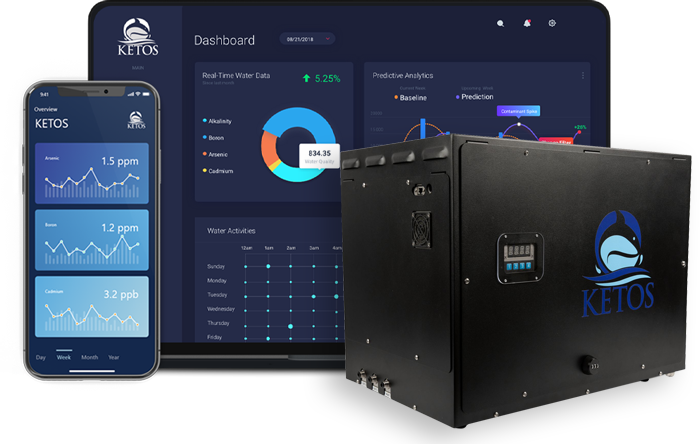
KETOS SHIELD continuously monitors 30+ parameters — replacing manual testing with automated, lab-accurate data.
Schedule a Demo →The Data Gap
Most facilities test quarterly, but loop chemistry can swing in hours if oxygen sneaks in or microbes oxidize nitrite. Over-dosing chemicals “just in case” burns through datacenter chemical budgets and raises disposal costs. Under-dosing risks corrosion, downtime, compliance issues and multi-thousand-dollar fines.
How KETOS SHIELD Turns the Tide
KETOS’ real-time water quality monitoring solutions are modular and interoperable, meaning they can easily integrate with closed-loop systems to avoid gaps in insights. By monitoring in real-time, and having threshold-based alerting capabilities, water operators monitoring closed-loop systems can gain greater oversight into water composition to protect sensitive infrastructure and manage discharge compliance.
- 30+ real-time parameters: KETOS SHIELD provides real-time monitoring of nitrite, nitrate, pH, TDS, dissolved metals (among 36 other parameters) every few minutes.
- Predictive alerts: KETOS SHIELD provides proactive alerts before permit breaches or corrosion.
- SCADA and API integration: KETOS SHIELD data can easily be integrated with SCADA for Smart dosing integration that trims chemical use by ~30 % in under a year (internal field data).
- Auto-generated compliance reports: KETOS SHIELD’s innovative software platform allows users to easily create compliance reports for auditors and ESG teams.
This translates into:
- Less water in, fewer chemicals out. Continuous optimization pushes cycles higher without risk.
- Lower total cost. Savings on chemicals, disposal and fines often eclipse sensor OPEX.
- A stronger ESG story. Minute-by-minute proof of both water savings and contaminant control.
Key Parameters to Monitor in Closed-Loop Cooling Systems
Effective closed-loop management requires tracking several critical water quality parameters on a continuous basis rather than relying on quarterly grab samples:
- pH (target 8.0–10.0): Drops below 8.0 can signal inhibitor breakdown, accelerating corrosion rates.
- Conductivity: Rising conductivity indicates dissolved solids buildup from system corrosion or makeup water contamination.
- Dissolved oxygen: Even trace oxygen ingress through pump seals or expansion tanks accelerates nitrite oxidation and pitting corrosion.
- Nitrite concentration (600–1,200 ppm for steel): The primary corrosion inhibitor in most closed loops—levels outside range mean either under-protection or wasted chemical spend.
- Temperature: Monitoring supply and return temperatures helps detect fouling, scaling, or heat exchanger degradation before efficiency drops.
Automated monitoring platforms like KETOS SHIELD track these parameters in real time, eliminating the data gap between quarterly tests and enabling predictive dosing adjustments before chemistry swings cause damage.
Conclusion
Water conservation in AI through closed-loop cooling, while beneficial, introduces complex chemical management issues. These systems involve additives and metals that require careful monitoring to avoid environmental and regulatory problems. Insufficient testing leads to data deficits and increases the risk of compliance breaches.
Real-time, zero-capex monitoring tools such as KETOS SHIELD are vital, offering constant data for proactive management, decreased chemical usage, and compliance documentation.
As AI data center construction continues at an exponential rate, we encourage data center operators and downstream utilities to proactively manage risks by checking out our solutions for recycled water quality monitoring. By being proactive with water management, data centers can avoid compliance issues, increase water reuse efficiency, reduce operating costs, and increasingly safeguard our public waters.
Reference List
- Interesting Engineering, “GPT-3 training consumed 700k L of water,” 2023.
- S. Ren et al., Making AI Less ‘Thirsty’, arXiv 2304.03271, 2025 / Newsweek coverage.
- Veolia Water Technologies, Handbook of Industrial Water Treatment – Ch. 32, accessed 2025.
- U.S. EPA, “Chemical Contaminant Rules: standard for nitrite,” Oct 2024.
- Parkson Corp., “Deicing Fluid Run-off Treatment System,” 2022.
- University of Michigan EHS, “Standards for the Proper Management of Open and Closed Loop Wastewater,” Jun 2023.
- Microsoft Cloud Blog, “Next-generation datacenters consume zero water for cooling,” Dec 2024.
Frequently Asked Questions About Closed-Loop Cooling Systems
What chemicals are used in closed-loop cooling water treatment?
Common additives include nitrite-based corrosion inhibitors (600–1,200 ppm for steel systems), molybdate or phosphate inhibitors for mixed-metal circuits, and glycol-based antifreeze for freeze protection. Each carries environmental risk if released untreated.
How often should closed-loop cooling water be tested?
While many facilities test quarterly, loop chemistry can shift in hours if oxygen ingress occurs or inhibitor levels drift. Best practice is continuous real-time monitoring of pH, conductivity, and inhibitor levels, with monthly laboratory confirmation for dissolved metals.
What are the environmental risks of closed-loop cooling systems?
A single unplanned drain-down of a 500 m³ loop can release over three tonnes of nitrite to local waterways. Glycol concentrations above 10% suffocate aquatic life by depleting dissolved oxygen. Molybdate and chromate inhibitors add heavy metals to discharge streams.
What is the ideal pH range for closed-loop cooling water?
The target range is typically 8.0–10.0. pH buffering from chemical treatment should keep levels stable; any drop may indicate inhibitor degradation or contamination. Continuous pH monitoring helps catch deviations before corrosion accelerates.
How does real-time monitoring improve closed-loop cooling system management?
Real-time sensors eliminate the data gap between quarterly tests, catching chemistry swings within minutes instead of months. This enables predictive chemical dosing, reduces inhibitor waste by 15–30%, and provides continuous compliance documentation for discharge permits.