

This is the first in a multi-part series based on a recent KETOS report on how AI will ultimately affect wastewater discharge in data centers. You can gain access to the full report here.
The advent of generative AI, epitomized by applications like ChatGPT, Claude, and Perplexity, has transformed the technology landscape and tech companies are pivoting toward AI-centric strategies. With the consumer appetite for AI applications driving compute power demand, more power is needed—and fast, causing a sudden proliferation in data centers.
The AI-Driven Capex Race and Its Environmental Implications
The pursuit of AI’s immense potential is fueling a capital expenditure (capex) arms race among private entities and, potentially, sovereign states. Currently, tech giants, confident in AI’s future dominance in computing and work, are heavily investing in data centers tailored for AI. This shift has profound implications for energy markets worldwide. After all, AI data centers typically house more compute power per server rack compared to conventional data centers, and this need for more compute power is projected to strain the already fragile energy grid, prompting calls for centers to move towards Net Zero (carbon neutrality).
However, building more data centers also means adopting more cooling measures to cover the increased square footage, and significant amounts of water will be needed to cool data centers adequately. Therefore, more data centers won’t just strain energy grids – they’ll also put ever-increasing pressure on tenuous local water resources. And, with more water usage comes more wastewater discharge – an issue that so far is being largely ignored – at our peril.
The Overlooked Issue of Wastewater Discharge
While energy demand, electronic waste management, and water availability issues dominate sustainability discussions, wastewater discharge from AI-focused data centers is rarely part of the sustainability discussion. This oversight is concerning, given that the water needed for AI data center operations will lead to a significant portion of wastewater discharge, which has the potential to pollute public water sources or overwhelm public water treatment operations.
Need real-time water quality monitoring?
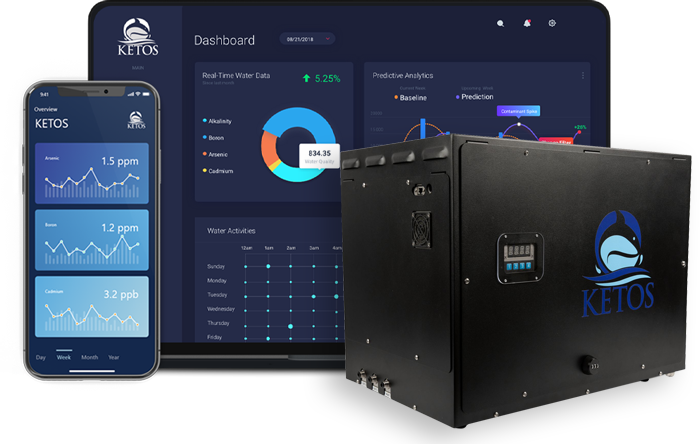
KETOS SHIELD continuously monitors 30+ parameters — replacing manual testing with automated, lab-accurate data.
Schedule a Demo →Why Wastewater Discharge is a Growing Concern
As AI-driven data centers proliferate, the issue of wastewater discharge is becoming increasingly critical for water operators and public water management. This is alarming on several fronts, including:
Volume of Wastewater Discharge
AI-focused data centers will consume vast amounts of water, a significant portion of which is discharged as wastewater. With the exponential projected growth of AI data centers, the volume of wastewater released into public water systems will rise dramatically.
Quality of Discharged Water
The wastewater discharged from data centers can contain various contaminants, including chemicals used in cooling systems, heavy metals, and other pollutants. If not properly treated, this wastewater can degrade the quality of local water bodies, posing risks to ecosystems and human health.
Pushing Wastewater Treatment Facilities Beyond Capacity
The influx of wastewater from data centers can overwhelm existing wastewater treatment facilities, which often operate at or near capacity. This increased load can lead to inefficiencies and potential failures in the treatment process – especially when existing wastewater treatment facilities are under stress. Added pressure on strained systems will inevitably result in inadequately treated water being discharged into the surrounding community or environment if treatment centers aren’t adequately upgraded in time to manage the influx.
Regulatory Compliance
Water operators must ensure that discharged water meets stringent regulatory standards to protect public and environmental health. The rising volume of wastewater from data centers adds complexity to compliance efforts, requiring enhanced monitoring and treatment capabilities.
Resource Allocation Needs Draining Funds
Managing the increased wastewater discharge from data centers requires significant resources, including advanced treatment technologies, skilled personnel, and financial investment. This can strain the budgets of public water management agencies, potentially diverting funds from other critical infrastructure projects.
Environmental Impacts on Multiple Fronts
Untreated or inadequately treated wastewater can have severe environmental impacts, including:
- Water Pollution: Contaminants can harm aquatic life, disrupt ecosystems, and reduce biodiversity.
- Soil Degradation: Polluted water can seep into the ground, affecting soil quality and agricultural productivity.
- Public Health Risks: Contaminated water sources can lead to health issues for surrounding communities.
Erosion of Public Trust and Community Relations
Water quality issues can erode public trust in water operators and local governments. Communities expect and demand clean, safe water. Failing to manage wastewater discharge from data centers effectively can lead to public outcry and damage the reputation of water management authorities.
Exacerbating Water Scarcity in the Age of Climate Change
Climate change is amplifying water scarcity and quality issues worldwide. Efficient water use and proper wastewater management are crucial to ensuring sustainable water supplies. The high water consumption and subsequent discharge from data centers can compound local water scarcity problems, making it imperative to adopt sustainable practices.
The Urgent Need for Wastewater Management Solutions
To avert a water quality crisis, key stakeholders—data center operators, treatment plant operators, water supply managers, and policymakers—must recognize the growing concerns related to data center expansion and implement proactive measures. This includes:
- Acknowledgment and Measurement: Recognizing and measuring wastewater discharge is the first step. Accurate data collection will highlight the extent of the issue and inform mitigation strategies.
- Technological Advancements: Developing and deploying advanced wastewater treatment and reuse technologies can significantly reduce environmental impact.
- Best Practices: Establishing and adhering to best practices for wastewater management will ensure sustainable operations of AI data centers.
Key Water Quality Parameters for Data Center Wastewater Monitoring
Effective wastewater management at AI data centers requires continuous monitoring of several critical parameters to ensure regulatory compliance and minimize environmental impact:
- Temperature: Cooling discharge can raise receiving water temperatures by 5–15°F, disrupting aquatic ecosystems. NPDES permits typically set thermal discharge limits that require real-time tracking.
- pH: Chemical treatment additives can shift wastewater pH outside the 6.0–9.0 range required by most discharge permits, making continuous monitoring essential.
- Total Dissolved Solids (TDS): Evaporative cooling concentrates minerals with each cycle, pushing TDS levels that can exceed local discharge limits and harm downstream water quality.
- Conductivity: A real-time proxy for TDS, conductivity monitoring provides early warning when concentration cycles are driving dissolved solids beyond acceptable thresholds.
- Dissolved Oxygen: Thermal discharge and chemical oxygen demand from treatment additives can deplete DO in receiving waters, threatening aquatic life.
Platforms like KETOS SHIELD enable data center operators to monitor 30+ parameters in real time, providing the continuous compliance documentation that regulators increasingly demand and reducing the risk of permit violations.
Conclusion: A Collective Call to Action
The exponential growth of AI-focused infrastructure necessitates urgent attention to water resource management. While financial investment is crucial, the first step is acknowledging a growing problem and quickly moving towards sustainable practices. By collectively recognizing and addressing wastewater discharge, we can mitigate the environmental impact of AI data centers and protect our water resources for future generations.
Join the Conversation
At KETOS, we are dedicated to enhancing water quality monitoring through innovative digital solutions. While technological advancements hold a wealth of potential, managing water quality and wastewater discharge at data centers must be part of the AI revolution. KETOS SHIELD makes it possible to minimize a center’s wastewater contaminant footprint while maintaining operational efficiency. If you are a data center operator or a utility that works with a data center, we’d love to help you manage your wastewater discharge.
Want more insights into wastewater discharge trends in data centers? Download our whitepaper.
Frequently Asked Questions About AI Data Center Wastewater
How much water do AI data centers use?
A typical hyperscale data center consumes 3–5 million gallons of water per day for cooling. As AI workloads generate significantly more heat than traditional computing, water consumption per rack is increasing, with some AI-focused facilities using up to 50% more water than conventional data centers of the same size.
What contaminants are found in data center wastewater?
Data center wastewater commonly contains elevated total dissolved solids from evaporative concentration, chemical treatment additives such as corrosion inhibitors and biocides, heavy metals from system corrosion, and thermal pollution from cooling discharge. The specific contaminant profile depends on the cooling technology and water treatment regime used.
What regulations govern data center wastewater discharge?
Data centers discharging wastewater must comply with the Clean Water Act through NPDES permits, which set limits on temperature, pH, TDS, and specific contaminants. Local municipalities may impose additional pretreatment requirements. As data center proliferation accelerates, regulators are tightening discharge standards and enforcement.
How can data centers reduce their wastewater impact?
Key strategies include implementing real-time water quality monitoring to optimize treatment chemical dosing, increasing cooling cycles of concentration to reduce blowdown volume, adopting closed-loop or air-cooled systems where feasible, and investing in on-site wastewater treatment to meet or exceed discharge requirements.
Why is real-time monitoring important for data center water management?
Real-time monitoring replaces periodic grab sampling with continuous data, catching discharge exceedances within minutes rather than discovering violations days or weeks later. This enables proactive chemical dosing adjustments, automated compliance reporting, and early detection of system upsets—reducing both environmental risk and regulatory penalties.