

Water is a vital resource that sustains life on our planet. Throughout history, polluted water has had a devastating impact on public health and fragile ecosystems. Ensuring water quality through proper monitoring is crucial for the well-being of both humans and the environment. Today, automated water quality monitoring systems have transformed this task, providing real-time data to ensure safety, guarantee quality, and meet compliance requirements for water operators across the globe.
The Dawn Of Energy-Efficient Water Quality Assessment
Water quality assessment involves monitoring a water supply’s pH, turbidity, dissolved oxygen, and contaminants to determine if it is suitable for purposes such as drinking and irrigation. In the not-so-distant past, this process was done manually, requiring extensive fieldwork and laboratory analysis by a large team. Such methods lacked efficiency and were prone to human error – often leading to bad outcomes for people using a particular water supply.
However, technological advancements have driven the development of energy-efficient water quality assessment methods. This includes automatic water samplers as well as water sampling equipment that can be controlled and monitored remotely. By adopting these innovative approaches, water management organizations can achieve accurate results while minimizing time and cost for a once-cumbersome process.
Why Is Water Quality Testing Important?
It may seem counterintuitive to spend so much time testing a resource that is so omnipresent in our lives or developing water sampling equipment that automates and streamlines this process. Why is water quality testing such an important thing? Here are four key reasons why the process of monitoring water quality is vital to public health:
- Water quality monitoring ensures the safety of drinking water supplies by detecting contaminants and other harmful bacteria.
- Sampling water from an aquatic ecosystem helps maintain its health and balance by monitoring pollution levels.
- An automatic water monitoring system can identify potential risks to industrial processes that rely on high-quality water.
- State-of-the-art water sampling equipment can help resource managers and conservationists make better decisions about the environment’s stewardship.
Need real-time water quality monitoring?
KETOS SHIELD continuously monitors 30+ parameters — replacing manual testing with automated, lab-accurate data.
Schedule a Demo →Using Automated Water Quality Monitoring Systems To Improve Efficiency
Today’s water sampling equipment combines hardware, software, automated reporting, and predictive analytics to help water operators automate the water sampling process. Using automatic water samplers, operators can monitor water quality in real time and identify problems the moment they arise. This will ensure that water quality meets specific quality and safety standards, all of the time.
Thanks to advancements in technology, water operators now have innovations like automated water quality monitoring systems to execute water quality monitoring more efficiently. Keep reading to learn more about some of these new technologies that are revolutionizing how water operators monitor and maintain the purity of our water sources.
Four Technologies That Make Water Monitoring More Efficient
- Remote sensors and IoT – One of the key technologies a robust automated water quality monitoring system should have is remote sensing. Combined with the Internet of Things (IoT), this technology allows automated water sampling equipment to collect data from various sensors and devices in real time. If problems are detected by the automatic water sampler, operators can respond to issues quickly. Remote sensing and IoT use satellite imagery, drones, and connected sensors to provide information about temperature, pH level, turbidity, and dissolved oxygen in a specific water supply. This in turn allows for more effective management of water resources.
- Artificial intelligence and machine learning – artificial intelligence (AI) and machine learning (ML) algorithms play a critical role in today’s water quality testing. AI algorithms analyze vast amounts of data collected through remote sensing and IoT devices, which improves the accuracy and efficiency of the process. AI algorithms also can identify patterns and anomalies in water quality parameters, allowing for the early detection and prediction of potential contamination. This means that water operators can base their responses on accurate and predictive data.
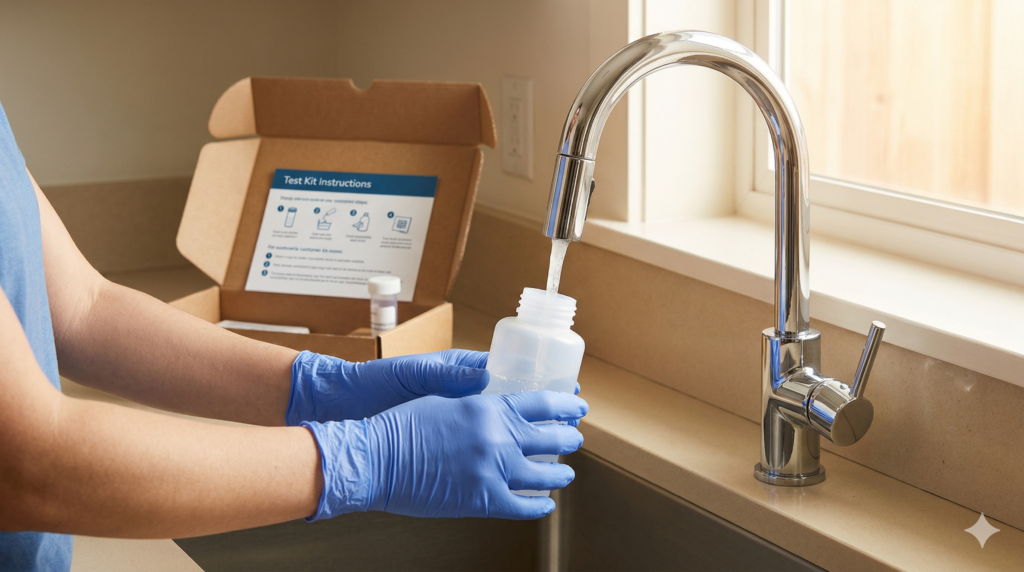
- Portable testing devices – manual water quality testing processes most often involve collecting water samples and sending them to laboratories for analysis. This method was time-consuming and resource-intensive. Today, portable testing devices like automatic water samplers allow on-site testing with instant results. These devices are small, easy to use, and provide accurate measurements. Such automated water quality monitoring systems are extremely beneficial in remote areas where access to laboratories is limited.
- Energy-efficient sensor technologies – low-power sensor technologies have significantly reduced the energy used by water sampling equipment while still maintaining accurate measurements. These tiny sensors can be integrated into IoT systems and operate for extended periods on minimal power. The key benefit to this technology is a longer lifespan and reduced environmental impact.
The Benefits Of Automatic Water Samplers
Transitioning to an automated water quality monitoring system is one way to scale up your business model. Automating water sampling equipment and processes will help you identify water quality issues before they negatively impact your business. Here are three key benefits to automating this process:
- Never miss a test – with an automatic water sampler, you won’t have to rely on operators to collect samples, send the samples to a lab, or run tests in the field.
- Real-time results – with an automated water quality monitoring system, you won’t have to wait for test results. You will know if your water meets safety, quality, and compliance standards in real time.
- Monitor from anywhere/real-time testing – with an autonomous system, you won’t have to worry about manual sampling testing. Enjoy real-time data as it is delivered to your device, no matter where you are!
Having access to real-time insight from an automated water quality monitoring system means that you can be proactive and monitor your water supply wisely. But it also ensures that you will meet all industry safety, quality, and compliance requirements. As a bonus, automatic water sampling equipment will save you time and money, too!
Key Water Quality Parameters Measured by Automated Systems
An effective automated water quality monitoring system should track a comprehensive range of parameters to deliver a complete picture of water health. The most common parameters measured by modern systems include pH, dissolved oxygen, turbidity, conductivity, temperature, and oxidation reduction potential (ORP). However, advanced platforms go further by monitoring heavy metals such as lead, arsenic, mercury, and chromium, as well as nutrients like nitrates, nitrites, and phosphates.
The ability to test for 30 or more parameters from a single device eliminates the need for multiple handheld instruments or repeated lab submissions. For industries managing complex water streams — from cooling towers to agricultural runoff — multiparameter monitoring helps operators detect contamination events early, correlate trends across parameters, and respond before violations occur.
Industry Applications for Automated Water Quality Monitoring
Automated water quality monitoring systems serve a wide range of industries, each with unique testing requirements and compliance obligations.
Municipal water utilities rely on continuous monitoring to ensure drinking water safety across distribution networks. Real-time alerts for contaminants like lead or chlorine residual help utilities respond to issues before they reach consumers.
Agriculture and irrigation operations use water quality data to protect crop health and optimize nutrient delivery. Monitoring parameters such as salinity, pH, and dissolved solids helps growers avoid yield losses caused by poor water quality.
Industrial manufacturing facilities — including food and beverage, pharmaceutical, and semiconductor plants — require precise water quality for production processes. Automated systems reduce downtime by catching quality deviations before they affect output.
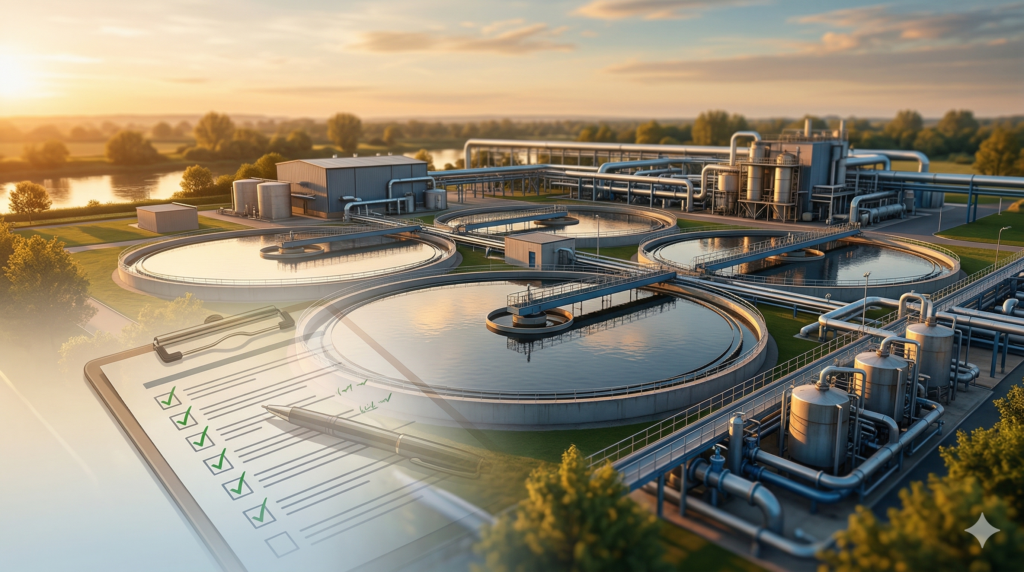
Wastewater treatment plants depend on continuous monitoring to meet discharge permit requirements. Automated systems track parameters like biological oxygen demand, total suspended solids, and nutrient levels to ensure treated effluent meets regulatory limits.
Energy and power generation facilities, including nuclear plants, use automated monitoring for boiler feedwater and cooling systems where water purity directly impacts equipment life and safety.
Compliance and Regulatory Standards
Water quality monitoring is not just a best practice — it is a legal requirement in many jurisdictions. In the United States, the Environmental Protection Agency (EPA) enforces standards under the Safe Drinking Water Act (SDWA) and the Clean Water Act (CWA). These regulations set maximum contaminant levels (MCLs) for dozens of substances and require regular testing and reporting.
An automated water quality monitoring system simplifies compliance by generating audit-ready reports, maintaining continuous data logs, and triggering threshold-based alerts when parameters approach regulatory limits. This proactive approach reduces the risk of violations and the associated penalties, which can reach tens of thousands of dollars per day.
Organizations subject to National Pollutant Discharge Elimination System (NPDES) permits benefit particularly from automated monitoring, as continuous data collection satisfies the documentation requirements that periodic grab sampling cannot.
How KETOS Automates Water Quality Monitoring
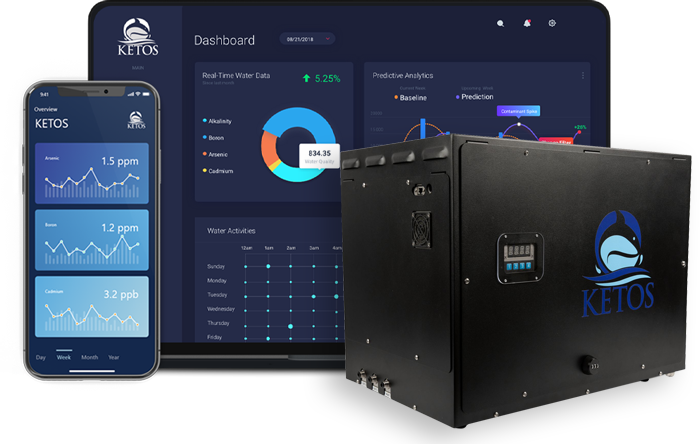
The KETOS solution is a fully integrated platform that combines patented IoT hardware, cloud-based software, automated reporting, and predictive analytics into a single subscription service. At the core of the platform is the KETOS SHIELD — an autonomous device that remotely monitors and tests over 30 water quality parameters with lab-grade accuracy.
Unlike traditional testing approaches that require manual sample collection and lab turnaround times, the KETOS SHIELD delivers real-time results with parts-per-billion (ppb) specificity. Test results fall within ±3 to ±10 percent of NELAC-accredited laboratory results, and the system is EPA-compliant.
Key advantages of the KETOS platform include:
- Zero capital expenditure — the entire solution is offered as a flat-fee subscription that includes hardware, connectivity, software, maintenance, and support.
- Predictive analytics — machine learning algorithms identify trends and forecast potential issues before they become problems.
- Remote monitoring — access real-time data, configure alerts, and manage devices from any web browser or mobile app.
- Flexible connectivity — devices connect via LoRa, WiFi, cellular, or existing client networks to fit any deployment environment.
Whether you manage a municipal water system, an industrial facility, or an agricultural operation, the KETOS automated water quality monitoring system provides the data, insights, and compliance assurance you need — all without adding headcount or complexity.
For full technical specifications, parameter lists, and a comparison of monitoring methods, visit the KETOS SHIELD product page.
Learn more about the KETOS solution →
Frequently Asked Questions About Automated Water Quality Monitoring
What is an automated water quality monitoring system?
An automated water quality monitoring system is a technology platform that uses IoT sensors, connected devices, and cloud-based software to continuously measure water quality parameters — such as pH, dissolved oxygen, turbidity, and contaminants — without manual sample collection. These systems deliver real-time data, automated alerts, and compliance-ready reports.
What parameters can automated water monitoring systems detect?
Advanced automated systems can detect 30 or more parameters, including basic indicators like pH, temperature, and conductivity, as well as heavy metals (lead, arsenic, mercury, chromium), nutrients (nitrates, phosphates), and other contaminants like fluoride and chlorine. The specific parameters depend on the system and the application requirements.
How does automated water quality monitoring improve compliance?
Automated monitoring systems maintain continuous data logs, generate audit-ready reports, and send threshold-based alerts when parameters approach regulatory limits. This proactive approach helps organizations meet EPA, SDWA, and CWA requirements while reducing the risk of violations and penalties.
What industries use automated water quality monitoring?
Automated water quality monitoring systems are used across municipal water utilities, agriculture and irrigation, industrial manufacturing (food and beverage, pharmaceuticals, semiconductors), wastewater treatment, and energy and power generation. Any operation that depends on consistent water quality can benefit from automated monitoring.
How accurate are automated water quality monitoring systems compared to lab testing?
Modern automated systems deliver lab-grade accuracy. For example, the KETOS SHIELD produces test results within ±3 to ±10 percent of NELAC-accredited laboratory results while providing real-time data instead of the days or weeks required for traditional lab analysis.
Related Resources
Related topics: What is continuous water quality monitoring? | Tailings pond water management