
2050 has been highlighted by UNESCO as a critical milestone for the diminishing water resources that we heavily rely on. The urgency is further fueled by the adverse impacts of climate change and the rapidly expanding global population, leaving us with limited time to acknowledge and address this imminent challenge. Amidst this pressing scenario, there is a glimmer of hope in the proactive stance taken by certain water conservation companies and water saving companies.
This article highlights a range of water conservation companies in various industries working to enhance water management practices. From technology to construction and manufacturing sectors, these businesses acknowledge the critical importance of preserving water resources and are dedicated to implementing innovative solutions to address the pressing issue of water wastage.
Water conservation companies and water saving companies are leading the way in developing innovative technologies to enhance water efficiency, minimize waste, and enhance water quality. Through their sustainable initiatives, these industry leaders are not only setting a strong precedent but also showcasing the economic advantages of responsible water management. Their proactive stance in addressing water scarcity serves as an inspiration for others to embrace water sustainability and work towards a secure water future.

1. Google
Google, a tech giant in the IT industry, is addressing the significant heat generated by hardware on its campuses by resorting to substantial amounts of water for cooling purposes. In a bid to reduce its water footprint, Google has committed to replenishing 120% of the water it consumes in its facilities and data centers. The company is exploring innovative cooling solutions that utilize alternative water sources like seawater and recycled wastewater. Moreover, Google is looking into leveraging on-site water reservoirs such as treated wastewater and stormwater for various applications including landscape irrigation, office cooling, and toilet flushing.
Source: https://www.gstatic.com/gumdrop/sustainability/google-water-stewardship.pdf

2. Ford Motor Company
The global automotive industry stands out as one of the largest consumers of water, with the average car production consuming a staggering 39,000 gallons of water. Ford Motor Company, since the turn of the millennium, has impressively slashed its water usage by 70%, conserving over 11 billion gallons in the process. Continuously lauded for its commitment to water conservation, CDP has consistently awarded Ford an “A” grade for six consecutive years.
Source: https://ansamotorsbb.com/ford-wins-gold-for-sustainable-development.html
Need real-time water quality monitoring?
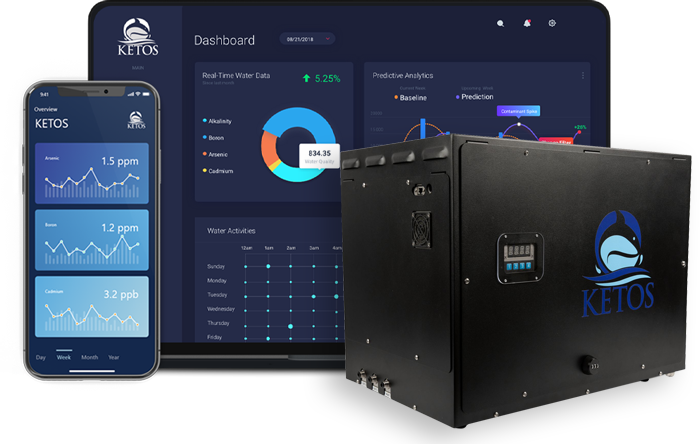
KETOS SHIELD continuously monitors 30+ parameters — replacing manual testing with automated, lab-accurate data.
Schedule a Demo →3. Coca-Cola
In the UN 2023 Water Conference, The Coca-Cola Company presented three new objectives to boost its efforts in water sustainability. James Quincey, the Chairman and CEO, engaged in various activities to discuss the company’s focus on directing water-related investments to areas with the most pressing needs. The company’s comprehensive water strategy for 2030 is designed to ensure water stability within its facilities, surrounding watersheds, and the communities it serves, where it conducts business, acquires agricultural materials for its beverages, and impacts individuals’ daily experiences.
Source: https://www.coca-colacompany.com/media-center/2030-water-security-strategy

4. Kohler
Kohler was honored with the prestigious EPA WaterSense Sustained Excellence Award for the seventh time in 2021, acknowledging its dedication to promoting water conservation among customers and fellow businesses. Since introducing its initial WaterSense products in 2007, this Wisconsin-headquartered company has successfully preserved over 292 billion gallons of water and reduced water and energy costs by $5.8 billion.
Source: https://www.kohlercompany.com/who-we-are/awards-recognition/watersense/

5. Holcim Limited
Holcim Limited, the leading cement manufacturer in the US with 13 facilities producing 22 million tons of cement per year, is committed to significant water conservation measures. By 2030, the company plans to decrease water consumption by 33%, 20%, and 15% in cement, aggregates, and ready-mixed concrete production processes, respectively. Additionally, Holcim aims for 75% of its manufacturing sites to achieve water positivity.

6. PepsiCo
PepsiCo has shifted its perspective on water, recognizing it as a precious resource. The company is dedicated to maximizing water efficiency, embracing innovative technologies to achieve remarkable conservation results. By surpassing its water-use efficiency targets, PepsiCo has proven its commitment. Introducing cutting-edge tools such as the Treated Water Efficiency Tool has empowered beverage plants to enhance their water treatment processes. Through a comprehensive strategy, PepsiCo is successfully managing and preserving water resources across all its facilities.
Source: https://www.trust.org/item/20150115023656-fi2qk/

7. KB Homes
With a legacy spanning six decades, KB Homes stands out as a prominent figure in the U.S. housing construction sector, having successfully built more than 650,000 homes. Embracing an eco-conscious approach, they integrate innovative water-saving solutions such as Watersense faucets, toilets, and showerheads in their new property developments. This not only aids homeowners in reducing water consumption and utility expenses by up to $500 annually but also contributes to saving a remarkable 1.5 billion gallons of water each year.
8. Toro
The inefficiencies in irrigation systems lead to approximately 40% of water being wasted in agriculture due to factors like insufficient infrastructure, evaporation, and ineffective water management. The objective of The Toro Company is to combat this issue by offering innovative products and technologies that promote water conservation. One of their successful solutions is the Aqua-Traxx drip tape, empowering farmers to better manage water usage for their crops, thereby enhancing water efficiency and boosting agricultural productivity. Recognizing its dedication to water sustainability, The Toro Company was honored with the prestigious WaterSense award by the EPA for the seventh consecutive year in 2021.
Source: https://www.thetorocompany.com/static-files/cf4b4087-8063-4637-9a05-495b7443165e

9. Dr Pepper Snapple Group
Millions of dollars are being poured by the Dr Pepper Snapple Group into the Texas watersheds that supply water to its bottling plants. This significant investment not only safeguards the company’s interests, as water scarcity directly impacts its product output, but also contributes to environmental conservation by protecting the diminishing American prairie landscapes. The allocated funds are dedicated to activities such as reseeding, ensuring water purity, and implementing restoration projects aimed at revitalizing ecosystems that were once abundant.
Source: https://earth911.com/business-policy/5-brands-saving-water-conservation/

10. General Mills
A pilot program focusing on regenerative agriculture has been initiated by General Mills in Kansas. Teaming up with Ecotone Analytics, an impact assessment was carried out to evaluate the social return of the initiative. Impressively, the study revealed a remarkable 400% return on investment, showcasing advantages such as decreased soil erosion, heightened carbon sequestration, and enhanced surface water quality.
Key Takeaways
- Importance of Corporate Responsibility in Water Conservation: Large corporations across various sectors are taking water seriously and implementing significant programs to address water usage. Companies like Google, Ford, and Coca-Cola are not only working on reducing their water consumption but are also developing innovative solutions to replenish and enhance water availability in the environments they operate in. This underscores the role of corporate responsibility in tackling global environmental challenges, particularly in managing and conserving water resources.
- Diverse Approaches to Achieving Water Sustainability: There are various strategies and initiatives, from innovative reuse and water recycling to championing reduction across operations via technological advancements and process improvements. Google is looking for alternative water sources, Ford is dramatically reducing water usage, and Toro is developing more water-efficient irrigation systems. Implementing water-saving initiatives can also be done in stages. Focusing on one area or goal at a time can make championing water sustainability more manageable. So can seeking solutions that serve the dual purpose of promoting water sustainability while enhancing the business’s operations. By seeking technologies or solutions that promote a win-win scenario, businesses have an easier time getting essential stakeholder buy-in.
- Impact of Water Management on Business and Communities: Water management is crucial for the sustainability of businesses and the communities and environments they impact. Coca-Cola’s strategy to focus investments in high-need areas and KB Homes’ implementation of water-efficient fixtures in residential construction highlights how such initiatives can have meaningful long-term and knock-on effects beyond a business’s bottom line.
The Business Case for Corporate Water Stewardship Investments
Beyond environmental responsibility, the companies profiled above demonstrate that water stewardship delivers measurable financial returns. A 2023 CDP analysis found that companies reporting water-related risks and mitigation strategies outperformed their sector peers by an average of 4.5% in total shareholder return over a five-year period. The business case extends well beyond investor relations—reducing water consumption directly lowers utility costs, while minimizing wastewater discharge reduces treatment expenses and regulatory compliance burden.
Water risk is increasingly factored into corporate credit ratings and supply chain assessments. Major procurement organizations now require water stewardship disclosures from suppliers, and companies that cannot demonstrate responsible water management face exclusion from preferred vendor lists. For industries like food and beverage, semiconductor manufacturing, and pharmaceuticals, securing reliable access to high-quality water is not optional—it is a prerequisite for operational continuity.
Investing in real-time water monitoring technology is one of the highest-ROI sustainability actions a company can take. Automated monitoring systems reduce the need for manual sampling labor, provide early detection of contamination events that would otherwise require costly remediation, and generate the continuous data streams needed for ESG reporting frameworks like GRI, SASB, and CDP Water Security. Parameters including total dissolved solids, conductivity, and biochemical oxygen demand provide operators with actionable intelligence to optimize water use efficiency across operations.
As global water stress intensifies—with the World Resources Institute projecting that 25% of the world’s population will face extremely high water stress by 2030—companies that build water resilience now will have a significant competitive advantage over those that treat water management as an afterthought.
Frequently Asked Questions About Sustainable Water Practices in Industry
What is corporate water stewardship?
Corporate water stewardship is the commitment by companies to use water responsibly across their operations and supply chains. It involves reducing water consumption, improving water quality in discharge, investing in water recycling and reuse technologies, and collaborating with local communities to protect shared water resources. Leading companies set measurable water reduction targets and publicly report on their progress.
Why are companies investing in sustainable water practices?
Companies invest in sustainable water practices to manage operational risk from water scarcity, reduce costs through efficiency improvements, meet regulatory requirements, and respond to growing stakeholder expectations around environmental responsibility. Water stress affects supply chain continuity and production capacity, making sustainable water management a business-critical priority rather than just an environmental initiative.
Which industries use the most water?
The most water-intensive industries include food and beverage manufacturing, semiconductor and electronics production, chemical processing, mining and mineral extraction, and power generation. Within these sectors, companies that adopt water recycling, closed-loop systems, and real-time monitoring can significantly reduce their water footprint while maintaining production output.
How can companies measure and reduce their water footprint?
Companies can measure their water footprint by tracking total water intake, consumption, and discharge volumes alongside water quality parameters at each stage. Reduction strategies include implementing water recycling and reuse systems, optimizing cooling and cleaning processes, fixing leaks and inefficiencies, and deploying real-time monitoring to identify waste. Consistent measurement and reporting are essential for driving continuous improvement.
How does real-time water monitoring support sustainability goals?
Real-time water monitoring systems like KETOS SHIELD enable companies to continuously track water quality and usage across their operations. This provides immediate visibility into consumption patterns, helps detect leaks or process inefficiencies, ensures discharge compliance, and generates the data needed for accurate sustainability reporting. Automated monitoring replaces manual sampling, reducing labor costs while improving measurement accuracy and frequency.
Related Resources
See how technology is transforming water management: continuous water quality monitoring and automated monitoring systems are helping organizations achieve these sustainability goals.
Frequently Asked Questions About Sustainable Water Companies
What makes a water company sustainable?
A sustainable water company integrates environmental stewardship into its core operations by reducing water waste, minimizing energy consumption, and deploying technology that helps customers use water more efficiently.
How do sustainable water companies reduce environmental impact?
These companies employ real-time monitoring to detect leaks and inefficiencies, advanced treatment systems that enable water reuse, energy-efficient processes that lower carbon footprints, and data-driven analytics that help customers optimize their water consumption.
What role does technology play in sustainable water management?
Technology is central to modern sustainable water management. IoT sensors and automated monitoring platforms provide continuous visibility into water quality and usage. AI and machine learning analyze patterns to predict equipment failures and optimize treatment processes.
Why is water sustainability important for businesses?
Water sustainability directly affects operational resilience, regulatory compliance, and brand reputation. Businesses that proactively manage water resources reduce their exposure to supply disruptions and avoid costly regulatory penalties.
How does KETOS contribute to water sustainability?
KETOS provides an integrated water monitoring platform that combines IoT hardware, cloud-based software, and predictive analytics to help organizations manage water quality and consumption in real time.