
In recent years, the fashion industry has made significant strides toward sustainability, driven by growing consumer demand for ethical practices and environmental responsibility. Water stewardship is among the most pressing concerns and a critical aspect of sustainable operations, especially for clothing companies and textile manufacturers. Water is a vital resource in textile production, so managing and monitoring water quality ensures seamless operations and minimizes environmental impact.
Water Management in the Clothing Industry
The textile industry is one of the most water-intensive sectors, with processes like dyeing, finishing, and fabric washing requiring vast amounts of water. Textile dyeing and treatment alone comprise 20% of global industrial water pollution. Without proper management, this can contaminate local water sources, adversely affecting both ecosystems and communities. Therefore, clothing companies must manage and monitor water quality to reduce their water footprint and ensure compliance with environmental regulations.
Water Quality Parameters For Clothing Company Water Operators
Textile manufacturers must regularly monitor various water quality parameters, including pH levels, dissolved oxygen, total dissolved solids (TDS), and heavy metals like chromium and copper. Monitoring these parameters helps companies ensure that the water used in their processes meets safety standards and that the water discharged from their facilities does not harm the environment.
Need real-time water quality monitoring?
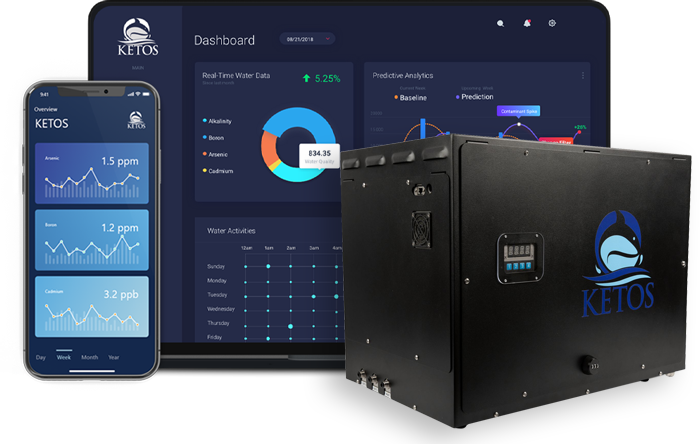
KETOS SHIELD continuously monitors 30+ parameters — replacing manual testing with automated, lab-accurate data.
Schedule a Demo →Water Consumption and the Clothing Industry
The scale of water usage in the clothing industry is staggering. The global textile and apparel industry is estimated to consume 93 billion cubic meters of water annually. This enormous water footprint underscores the need for adequate water stewardship and sustainable practices.
Leading Clothing Brands and Their Water Stewardship Commitments
Several leading clothing brands have taken bold steps to address water usage and pollution in their supply chains, setting ambitious sustainability goals for the coming years. Here’s how some of the world’s biggest clothing companies are embracing water stewardship:

Calvin Klein
Calvin Klein has set a strong example in the industry with its commitment to water stewardship. By 2025, the brand aims to eliminate water pollution from wet processors, ensuring that water leaving these facilities contains zero hazardous chemicals and is filtered for harmful microfibers. This is crucial for protecting aquatic ecosystems from the negative impacts of textile manufacturing.
Additionally, Calvin Klein is working to provide access to clean water in water-stressed sourcing communities and establish five collective action projects in these areas. The company also uses lower-impact techniques that consume less water, energy, and chemicals than industry standards, demonstrating a commitment to reducing its overall environmental footprint.

H&M
H&M has laid out an extensive water stewardship strategy with goals set for 2025 and 2030. By 2025, the company’s aim is a reduction in absolute total freshwater use by 10% against a 2022 baseline across all its facilities. Furthermore, H&M is committed to ensuring that its facilities meet prioritized ZDHC (Zero Discharge of Hazardous Chemicals) conventional parameters, safeguarding local water bodies from pollution.
The brand also plans to address water-related challenges and flood risks within its supply chain, ensuring supplier employees access to clean water, sanitation, and hygiene (WASH) facilities. Looking ahead to 2030, H&M targets a 30% reduction in freshwater extraction and use and ensures that most of the population in high-risk basins has access to sufficient, affordable, and climate-resilient water resources.

Levi Strauss & Co
Levi’s is another pioneer in sustainable water practices, with a strong focus on reducing water usage in manufacturing. By 2025, Levi’s aims to reduce freshwater use by 50% in areas of high water stress, using a 2018 baseline. The brand has also set contextual Water<Less targets for its fabric and garment suppliers, encouraging them to adopt water-efficient practices.
Levi’s commitment to water stewardship highlights the importance of focusing on regions where water scarcity poses a significant risk, ensuring that the company’s operations do not exacerbate existing water stress.
Nike
Nike has prioritized water conservation and community impact through innovative approaches. The brand is reducing water consumption by adopting new farming methods and increasing the use of recycled cotton. Additionally, Nike is advancing watershed restoration programs to reduce pesticide runoff, improve soil health, and enhance community access to water.
By 2025, Nike aims to achieve a 25% reduction in freshwater usage per kilogram in textile dyeing and finishing processes. The brand is also actively working to lower greenhouse gas emissions by using environmentally preferred materials.

The GAP
The GAP has set long-term goals for water stewardship, with milestones set for 2030 and 2050. By 2030, the company aims to empower 5 million people to improve and sustain access to clean water and sanitation. Additionally, the GAP is committed to reducing water use and replenishing water for nature, making its operations more sustainable.
By 2050, The GAP intends to support a more water-resilient value chain and achieve a net positive water impact in water-stressed regions. These goals reflect the company’s dedication to creating a lasting impact on the environment and surrounding communities.
Abercrombie & Fitch
Abercrombie & Fitch is reducing water usage across its denim production processes. The brand aims to implement new technologies and water-saving methodologies to increase water efficiency and promote the use of recycled water. By adopting these practices, Abercrombie & Fitch is being proactive about its water footprint and contributing to a more sustainable future.
How KETOS Helps Textile Manufacturers and Clothing Companies Manage Their Water
As more clothing companies and textile manufacturers build sustainability into their processes, finding affordable, efficient water management solutions becomes a priority. KETOS works with clothing and textile manufacturers to help monitor water quality on various fronts. For example, manufacturers can use KETOS to monitor water during textile production. It can also monitor effluent to help manufacturers safely recycle or remediate water.
With KETOS, clothing manufacturers get:
- 24/7 real-time water quality monitoring
- customization capabilities for 35+ parameters
- threshold-based alerting
- easier reporting for complete compliance transparency
- a modular, plug-and-play setup for faster, seamless integrations
- an affordable monthly fee and zero upfront CAPEX expenses
- zero maintenance and equipment costs and responsibilities
KETOS customers have found that adopting KETOS SHIELD technology has led to increased savings (no maintenance fees, manual labor, or lab costs), less water usage, better compliance, and a notable reduction in carbon output.
Microfiber Pollution and Wastewater Treatment Challenges
One of the most significant emerging water quality issues in the textile and clothing industry is microfiber pollution. Every stage of garment production—from fabric dyeing and finishing to consumer laundering—releases synthetic microfibers into wastewater. Studies estimate that a single textile manufacturing facility can release millions of microfiber particles per day into effluent streams, and these particles are small enough to pass through conventional wastewater treatment filters.
For clothing brands committed to water stewardship, addressing microfiber discharge requires investment in advanced filtration and water quality monitoring at manufacturing facilities. Technologies such as membrane bioreactors, dissolved air flotation, and electrocoagulation are being adopted at scale by leading textile manufacturers to capture microfibers before discharge. Monitoring turbidity and total suspended solids in real time provides operators with immediate feedback on filtration system performance and helps detect process upsets that could increase microfiber release.
Regulatory frameworks are beginning to catch up with the science. The European Union’s revised Urban Wastewater Treatment Directive includes provisions targeting microplastic discharge from textile production, and California has introduced labeling requirements for synthetic garments. Brands that monitor and reduce microfiber emissions now are positioning themselves ahead of regulations that will likely become standard across major manufacturing regions within the next several years.
Integrating continuous water quality monitoring into textile wastewater treatment processes enables brands to quantify their microfiber reduction efforts and report credible data to stakeholders. This capability is increasingly important as investors, consumers, and regulators demand transparent environmental performance metrics from the fashion and apparel industry.
Conclusion
The clothing industry’s reliance on water-intensive processes necessitates robust water stewardship practices. As the examples of Calvin Klein, H&M, Levi’s, Nike, The GAP, and Abercrombie & Fitch illustrate, leading brands are taking significant steps to manage their water usage, reduce pollution, and ensure sustainable practices across their supply chains. By committing to these ambitious water goals, these companies are both safeguarding their future operations while contributing to the preservation of sensitive water resources.
As the industry continues to evolve, all stakeholders must prioritize water stewardship and embrace sustainability, ensuring that fashion remains stylish, responsible, and environmentally conscious.
Frequently Asked Questions About Water Stewardship in the Clothing Industry
How much water does the clothing industry use?
The fashion and textile industry is one of the most water-intensive sectors globally, consuming an estimated 79 billion cubic meters of water annually. Producing a single cotton t-shirt can require approximately 2,700 liters of water, while a pair of jeans may use up to 10,000 liters when accounting for cotton cultivation, dyeing, finishing, and washing processes. This massive water footprint has made water stewardship a top sustainability priority for leading clothing brands.
What are the main water quality concerns in textile manufacturing?
Textile manufacturing generates wastewater containing synthetic dyes, heavy metals (such as chromium and copper from dyeing processes), surfactants, high pH chemicals from finishing treatments, and elevated total dissolved solids. These contaminants can be toxic to aquatic ecosystems and difficult to treat with conventional methods. Proper monitoring and treatment of textile wastewater is essential to prevent environmental damage and meet discharge regulations.
Which water quality parameters matter most for textile operations?
Critical parameters for textile manufacturing include pH, color, chemical oxygen demand (COD), total dissolved solids (TDS), conductivity, turbidity, and temperature. These measurements help operators control dyeing consistency, optimize water reuse potential, ensure treatment effectiveness, and verify discharge compliance. Monitoring specific parameters like color and COD is particularly important for tracking dye removal efficiency.
How are clothing brands improving their water practices?
Leading clothing brands are adopting water recycling systems in dyeing and finishing operations, investing in waterless or low-water dyeing technologies, setting public water reduction targets, requiring supply chain partners to meet water quality standards, and participating in industry initiatives like the ZDHC (Zero Discharge of Hazardous Chemicals) program. Many brands now publish annual water stewardship reports as part of their sustainability commitments.
How does real-time water monitoring help the textile industry?
Real-time monitoring platforms like KETOS SHIELD enable textile manufacturers to continuously track water quality across dyeing, finishing, and wastewater treatment operations. This provides immediate visibility into process water conditions, helps optimize chemical dosing, ensures treated wastewater meets discharge standards before release, and generates the data needed for sustainability reporting and supply chain compliance audits.